
Where to Find Better Hotel Deals Than Expedia’s Black Friday Sale
Black Friday might promise massive hotel savings, but Expedia's deals often aren't as good as they seem. This guide is for families and budget-conscious travelers who want real savings on accommodations—not just flashy discount percentages that barely move the needle on your final bill.
Most people don't realize that major booking sites like Expedia control hotel pricing through hidden commission structures that keep rates artificially high across platforms. You'll discover why shopping around on different travel sites rarely produces better results and learn about alternative booking methods that can actually cut your costs.
We'll show you how to access private hotel rates that bypass traditional booking site markups and explain why your credit card points might cost more than you're actually saving. You'll also learn why online travel agencies like Expedia all show nearly identical prices—and how to find the deals they don't want you to see.
The Truth Behind Black Friday Travel Sales - What's Really Going On.
Understanding the 15-33% Commission Fees Hotels Pay to Major Booking Sites
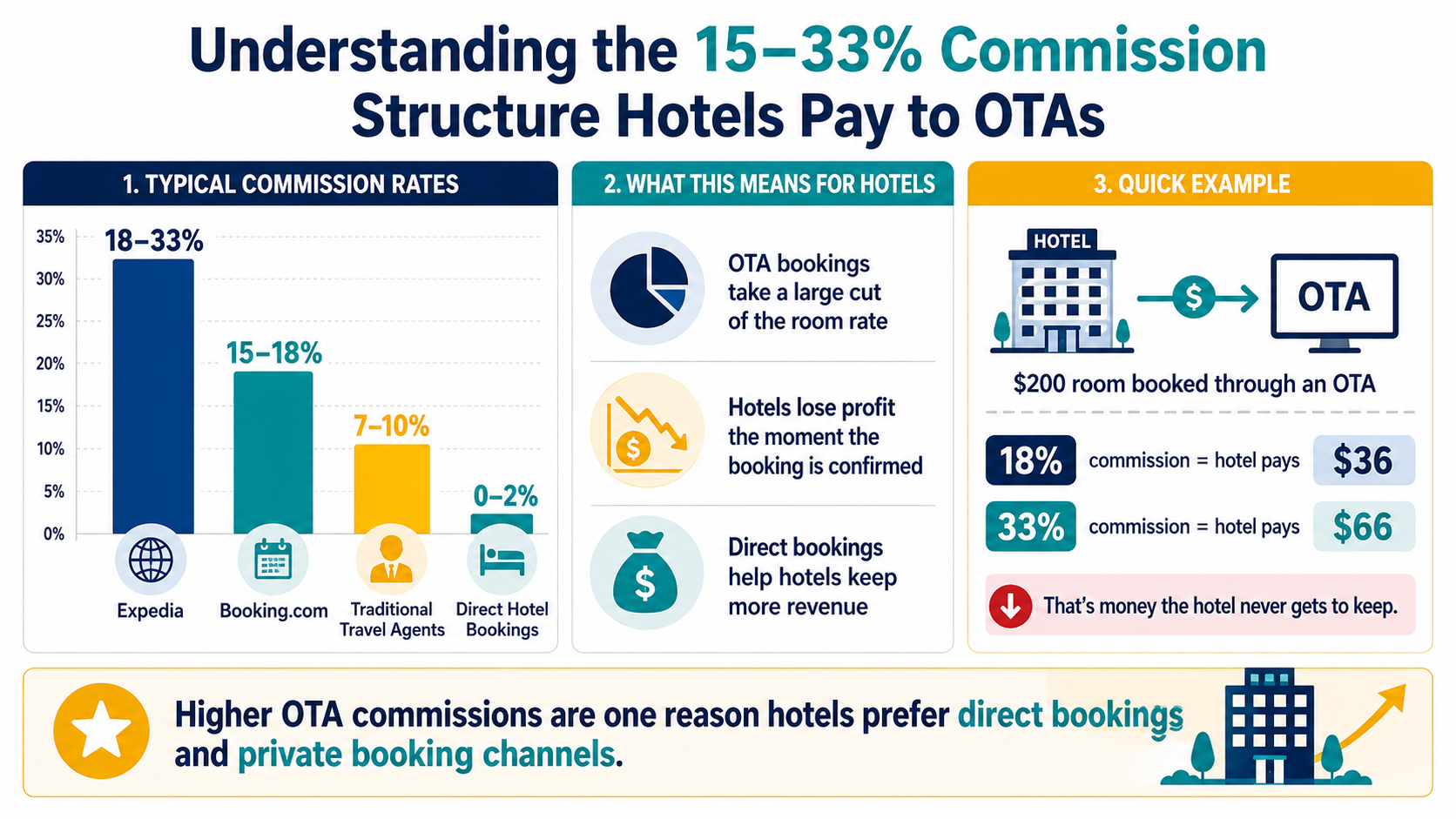
When you search for hotel deals better than Expedia's offerings, understanding the underlying commission structure reveals why these platforms can afford aggressive marketing campaigns. Expedia charges hotels between 18-33% of the room rate for each booking, while Booking.com typically charges 15-18% in commission fees. These substantial cuts far exceed traditional travel agent commissions, which historically ranged from 7-10%, and dwarf direct booking processing fees that hotels pay, which typically range from 0-2%.
These online travel agency pricing control mechanisms represent a significant financial burden for hotels. When a hotel receives $100 for a room booked through Expedia, they may only retain $67-82 after paying commissions. Hotels must absorb these costs entirely, leading to reduced profit margins that could otherwise support enhanced guest services or potentially lower room rates for direct bookings.
Why Rate Parity Requirements Prevent Hotels from Offering Lower Direct Prices
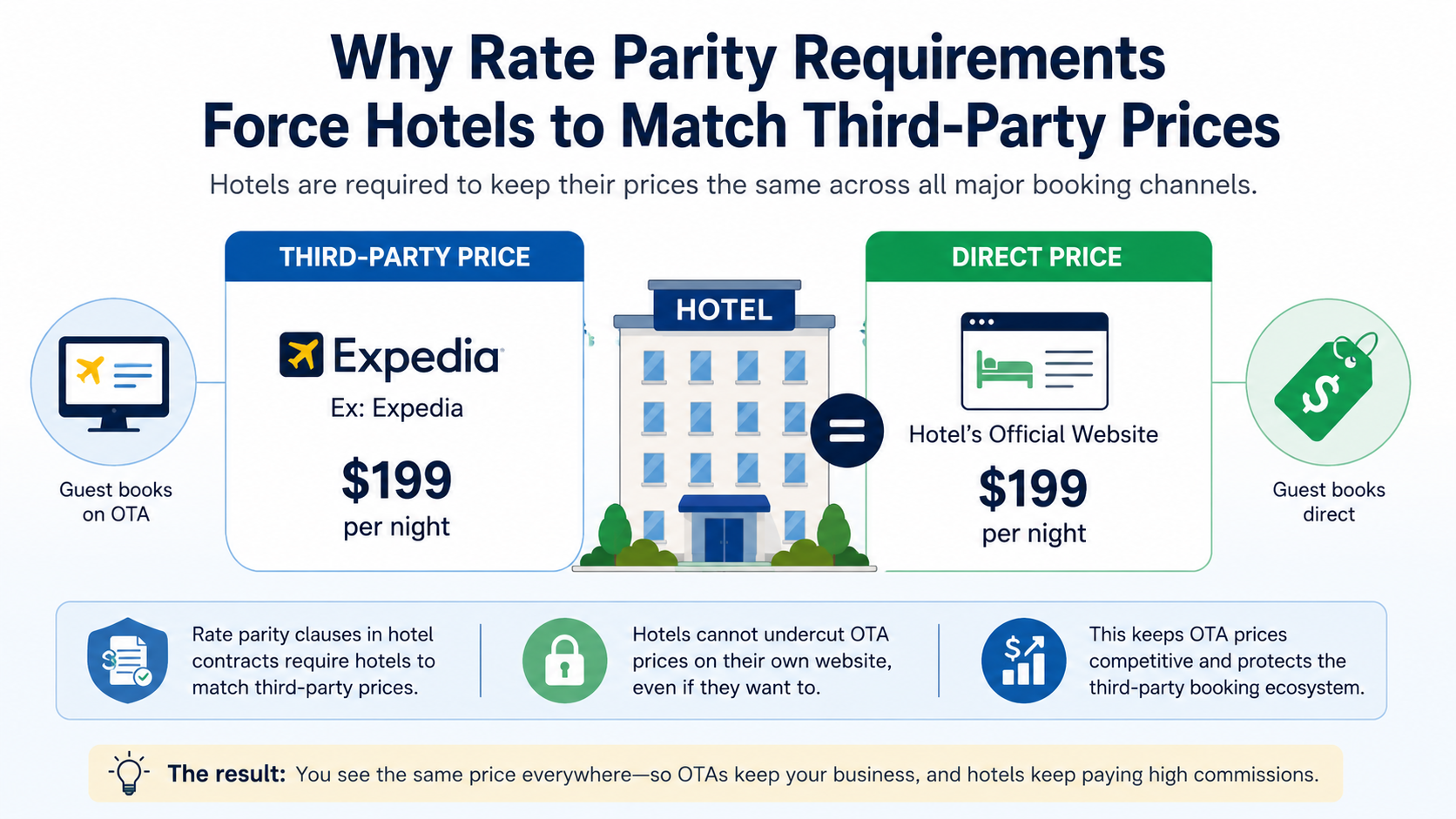
The hotel booking site markups create an artificial pricing environment through rate parity requirements mandated by major hotel franchisors. These contractual obligations prevent hotels from offering significantly lower rates on their direct booking channels, even though bypassing online travel agencies would eliminate substantial commission fees.
Hotels cannot legally pass the savings from avoiding OTA commissions directly to customers through reduced pricing on their own websites. This regulatory framework effectively protects the OTA business model by limiting hotels' ability to compete on price and artificially constraining the pricing difference between direct bookings and third-party platforms.
How Travel Sites Manipulate Rates While Taking Significant Cuts from Hotels
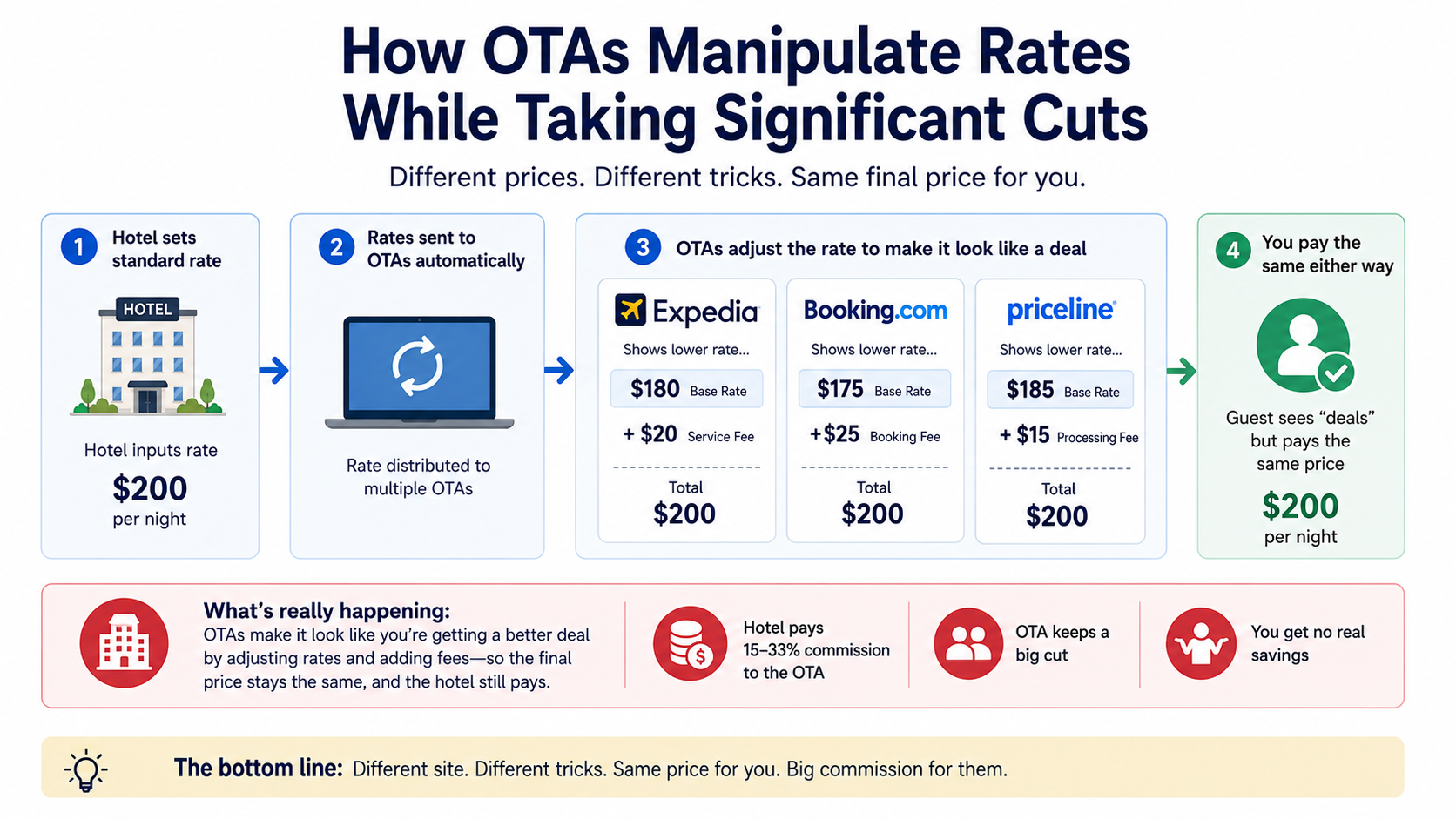
Beyond the hidden hotel commission structures, online travel agencies employ sophisticated pricing manipulation tactics to maintain their profit margins while creating an illusion of value for travelers. These platforms adjust rates downward or add fees strategically, making it appear that customers are receiving genuine discounts when searching for Black Friday hotel discounts alternatives.
This manipulation ensures that guests experience no actual savings compared to direct booking, yet the OTA secures substantial commission from the hotel. Apparent discounts on booking platforms often represent creative accounting mechanisms that maintain OTA profit margins without offering real value to travelers. The result is a system where the advertised "deals" primarily benefit the booking platform rather than the end customer.
Why All Major Travel Sites Show Nearly Identical Hotel Prices
How Connected Distribution Networks Create the Illusion of Competition
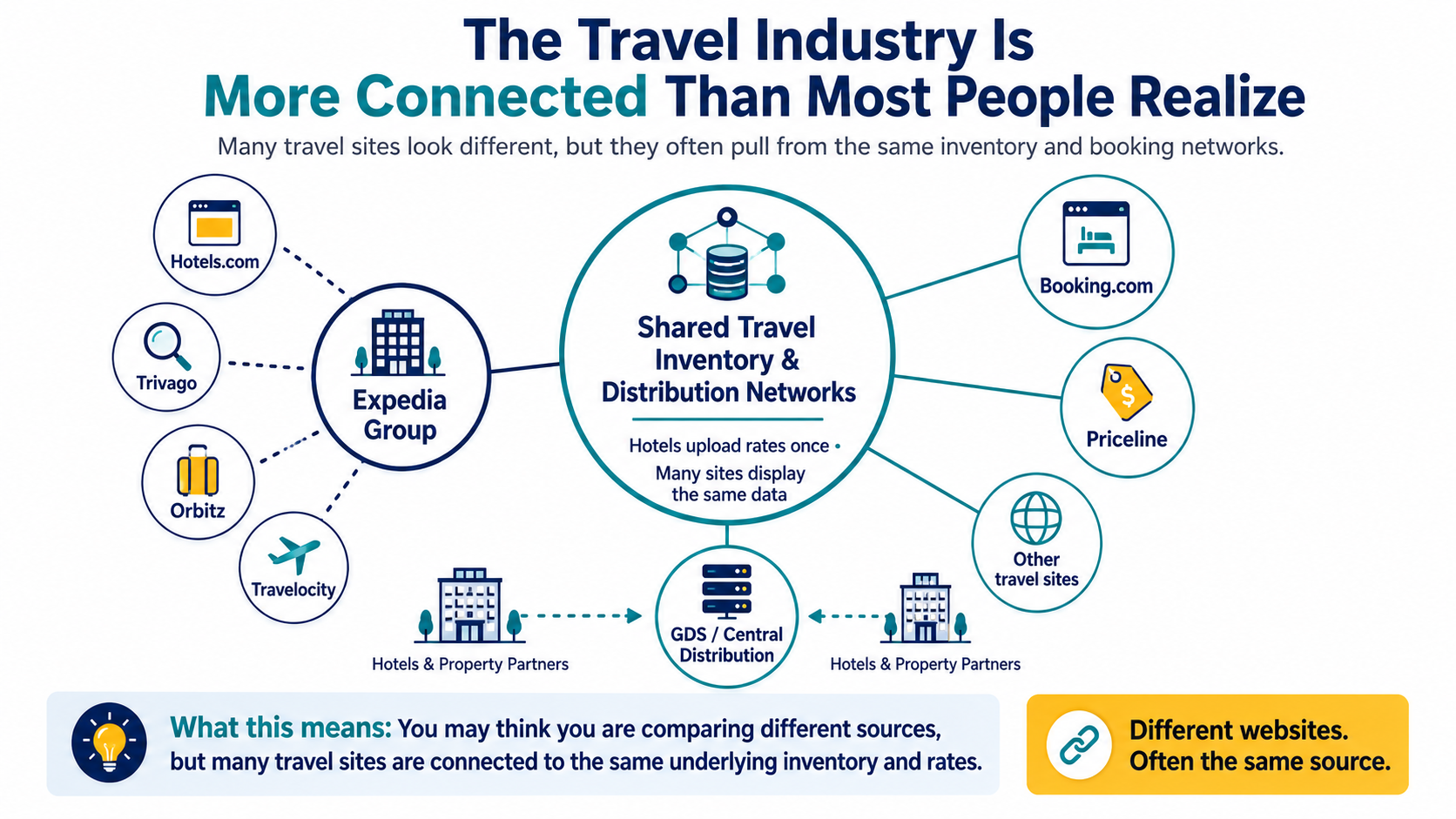
Most major travel booking sites tap into the same massive distribution networks, creating an illusion of choice when searching for hotel deals better than Expedia. The hotel industry operates through a Global Distribution System (GDS) which feeds identical rates and availability data to hundreds of travel booking sites simultaneously. This interconnected system makes it nearly impossible to find genuine hotel discounts through traditional comparison shopping.
The consolidation runs deeper than most travelers realize. Expedia Group owns multiple brands including Hotels.com, Trivago, Orbitz, and Travelocity that all pull from identical inventory pools. When you think you're comparing different platforms, you're often comparing different faces of the same underlying system. Hotels typically offer the same commission rates to major distributors, leading to similar markups across platforms and making dramatic price differences rare among mainstream booking sites.
Why Comparison Sites Often Pull from the Same Limited Sources
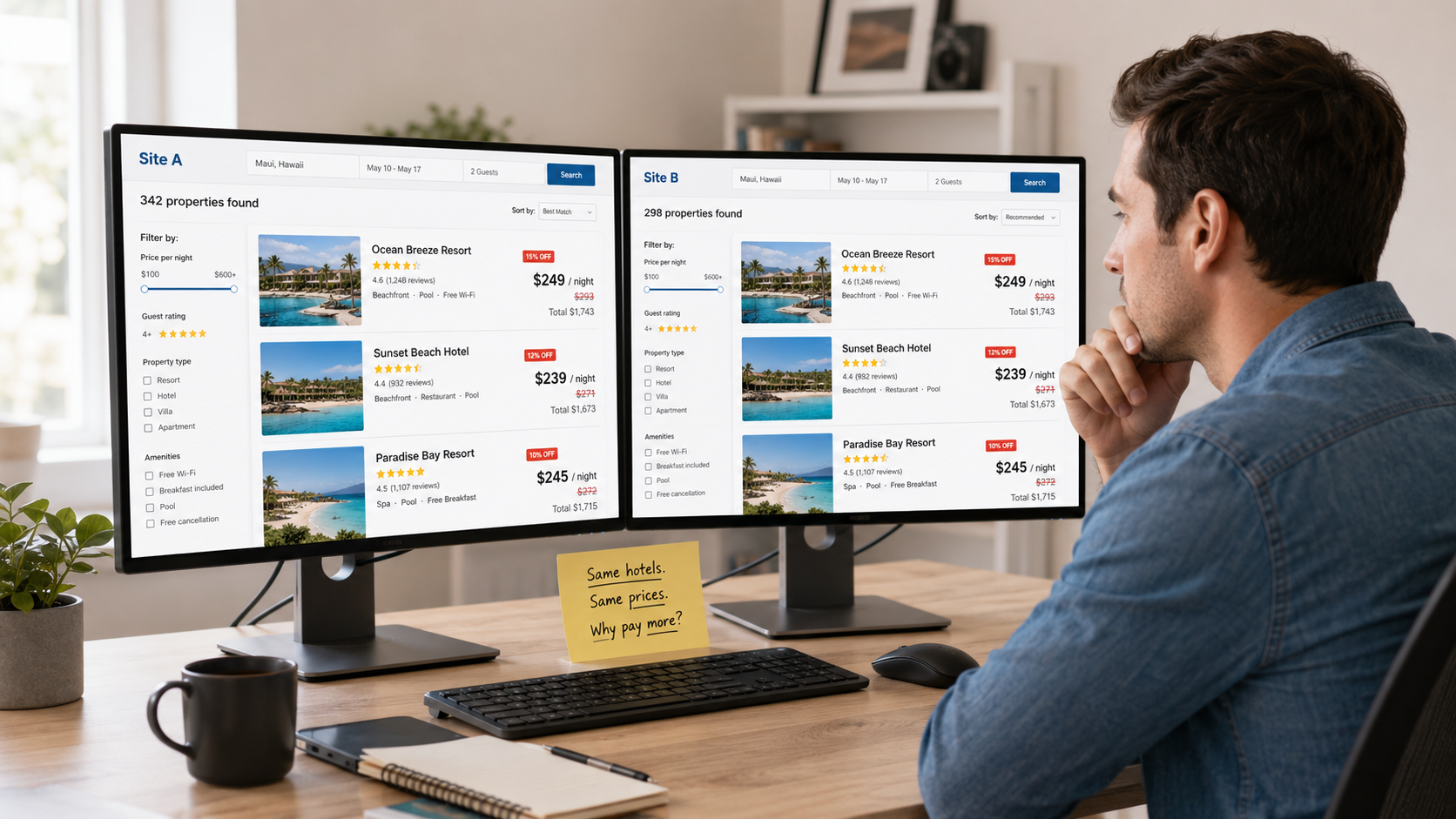
Comparison websites like Kayak, Trivago, or Google Travel aggregate information from interconnected sources or parent companies, creating a false sense of comprehensive price shopping. These platforms don't access truly independent inventory sources but rather compile data from the same network of distributors and booking engines.
Hotels implement rate parity clauses requiring booking platforms to match or stay within a narrow range of their direct booking prices, preventing significant undercutting. This regulatory framework ensures that even when sites appear to compete, they're operating within predetermined price corridors that eliminate meaningful competition.
How Price Shopping Feels Futile When Everything Costs the Same

Traditional price shopping feels futile because interconnected systems and rate parity clauses ensure nearly identical prices across major OTAs like Expedia, Booking.com, and Hotels.com. Price variations usually stem from bundled services, loyalty point values, or temporary promotional credits, not actual room rate differences.
OTAs use algorithms to personalize prices based on user behavior and location data, but these adjustments occur within the same constrained pricing framework. The illusion of savings comes from different presentation methods or package deals rather than genuine hotel booking site markups variations.
Access Private Hotel Rates That Bypass Traditional Booking Site Markups
How Wholesale Platforms Cut Out Middleman Fees and Commissions
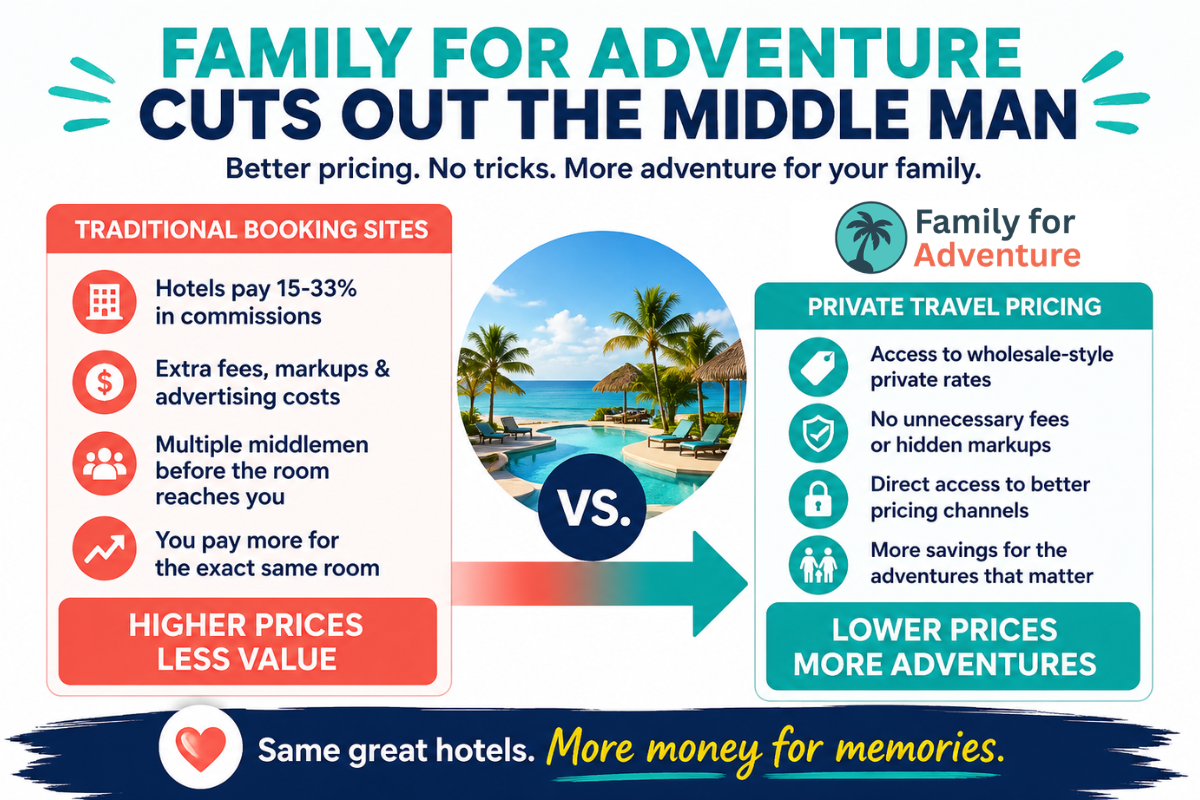
Public booking sites operate on a commission-based system where displayed prices include multiple layers of fees, commissions, platform markups, and advertising costs that directly inflate what travelers pay. These hidden hotel commission structures create substantial markups that make hotel deals better than Expedia's offerings nearly impossible to find through traditional channels.
Wholesale platforms fundamentally change this equation by removing these unnecessary markup layers to provide access to private travel pricing. Unlike conventional online travel agencies that add commissions at every step, wholesale approaches eliminate the commission structure that drives up costs on traditional booking sites. This creates genuine savings opportunities that don't rely on temporary flash sales or complicated points systems.
The wholesale model bypasses hotel booking fees entirely, accessing pricing channels that exist outside the public booking ecosystem. While public OTAs only show public OTA pricing, hotels and resorts actually maintain different pricing channels for various types of buyers, including wholesale partners and member-based platforms.
Get Access to Hotel Deals Not Available on Public Travel Sites
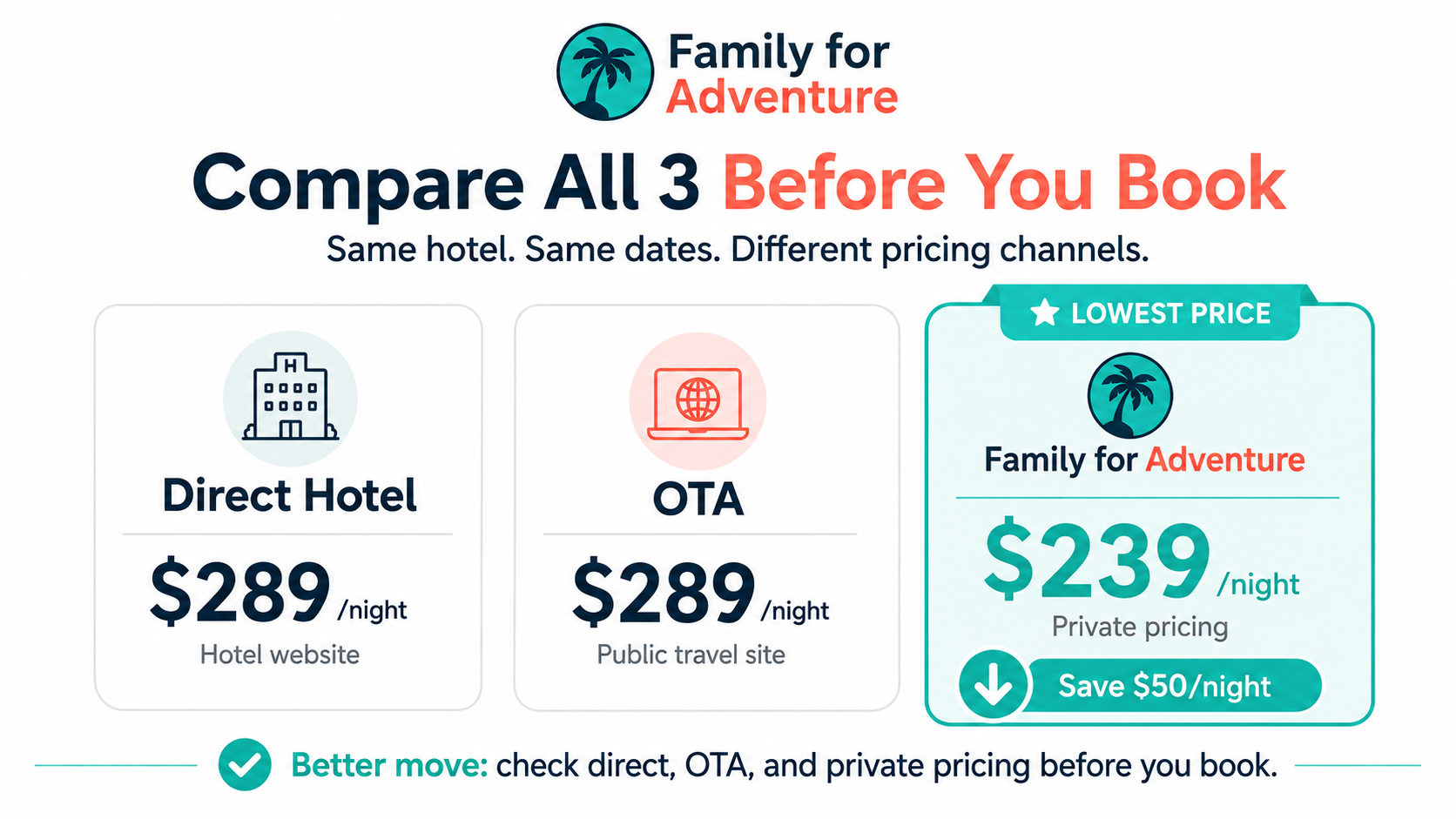
Hotels maintain a complex pricing ecosystem that extends far beyond what appears on public booking sites. Public OTAs like Expedia, Orbitz, Priceline, and Travelocity represent just one segment of hotel pricing, not the complete picture that savvy travelers need to access.
Hotels and resorts strategically maintain different pricing channels for wholesale partners and member-based platforms, offering hidden discounts that never appear on traditional booking sites. These private hotel rates access genuine wholesale pricing that completely bypasses the markup structures built into public platforms.
At Family for Adventure help families access pricing not available through conventional channels, providing more cost-effective alternatives to standard booking methods. This approach reveals hotel pricing that remains hidden from public view, offering substantial savings compared to Black Friday Expedia deals or other promotional pricing from major travel sites.
Turn Hotel Savings into More Family Travel Opportunities and Experiences

The primary obstacle preventing families from traveling more often centers on high costs, including hotels, flights, rental cars, meals, and activities that quickly accumulate into budget-breaking totals. More affordable hotel pricing through wholesale access creates opportunities to redirect savings toward the special parts of trips that create lasting memories.
When families save significantly on hotels and resorts through private rate access, they can allocate more budget toward extra nights, better resort accommodations, or enhanced activities and experiences. This shift transforms vacation planning from a cost-cutting exercise into an opportunity-maximizing strategy.
Bypassing hotel booking site markups opens doors to more frequent trips, better destinations, and longer stays while reducing the financial stress that often accompanies vacation planning. Instead of settling for basic accommodations to stay within budget, families can access premium properties at prices comparable to standard hotels through public booking sites, fundamentally changing what becomes possible within existing travel budgets.
👉 Try it for yourself and see how much you could save on your next trip.
Why Booking Direct with Hotels Doesn't Guarantee Better Prices
How Price Parity Agreements Limit Hotels' Ability to Offer Lower Rates

Now that we've explored how online travel agencies control pricing through their commission structures, it becomes clear why direct hotel booking vs travel sites doesn't automatically favor the hotel's own website. Hotels participate in rate parity agreements that fundamentally restrict their pricing flexibility. These contractual arrangements prevent hotels from significantly undercutting their distribution partners like Expedia and other major online travel agencies.
Under these agreements, hotels must offer the same rates on their direct booking sites as they provide to third-party platforms. This requirement creates a controlled pricing environment where room rates remain essentially identical across all channels. The result is a system that limits genuine competition and prevents the race-to-the-bottom pricing that could potentially benefit travelers seeking hotel deals better than Expedia's offerings.
This controlled pricing structure explains why you'll rarely find dramatically different rates when comparing the same room across multiple booking platforms during peak sales periods, including Black Friday hotel discounts alternatives.
When Hotel Perks Don't Translate to Real Money Savings

While direct bookings frequently come with enticing perks such as complimentary breakfast, room upgrades, or loyalty points accumulation, these benefits don't always translate to actual money savings. The perceived value of these amenities might not offset the total booking cost, particularly when they don't align with your specific travel preferences and needs.
Consider scenarios where hotels offer free breakfast as a booking incentive, but you prefer exploring local dining options or have dietary restrictions that limit your ability to enjoy the provided meal. In such cases, you're essentially paying for a service you won't utilize. Similarly, room upgrades may seem valuable, but if the base room already meets your requirements, the upgrade doesn't provide tangible financial benefit.
Hotel booking site markups often remain consistent whether you book directly or through third-party platforms, making these perks more of a marketing strategy than genuine cost savings.
Compare Direct, OTA, and Private Pricing to Find the Best Deals
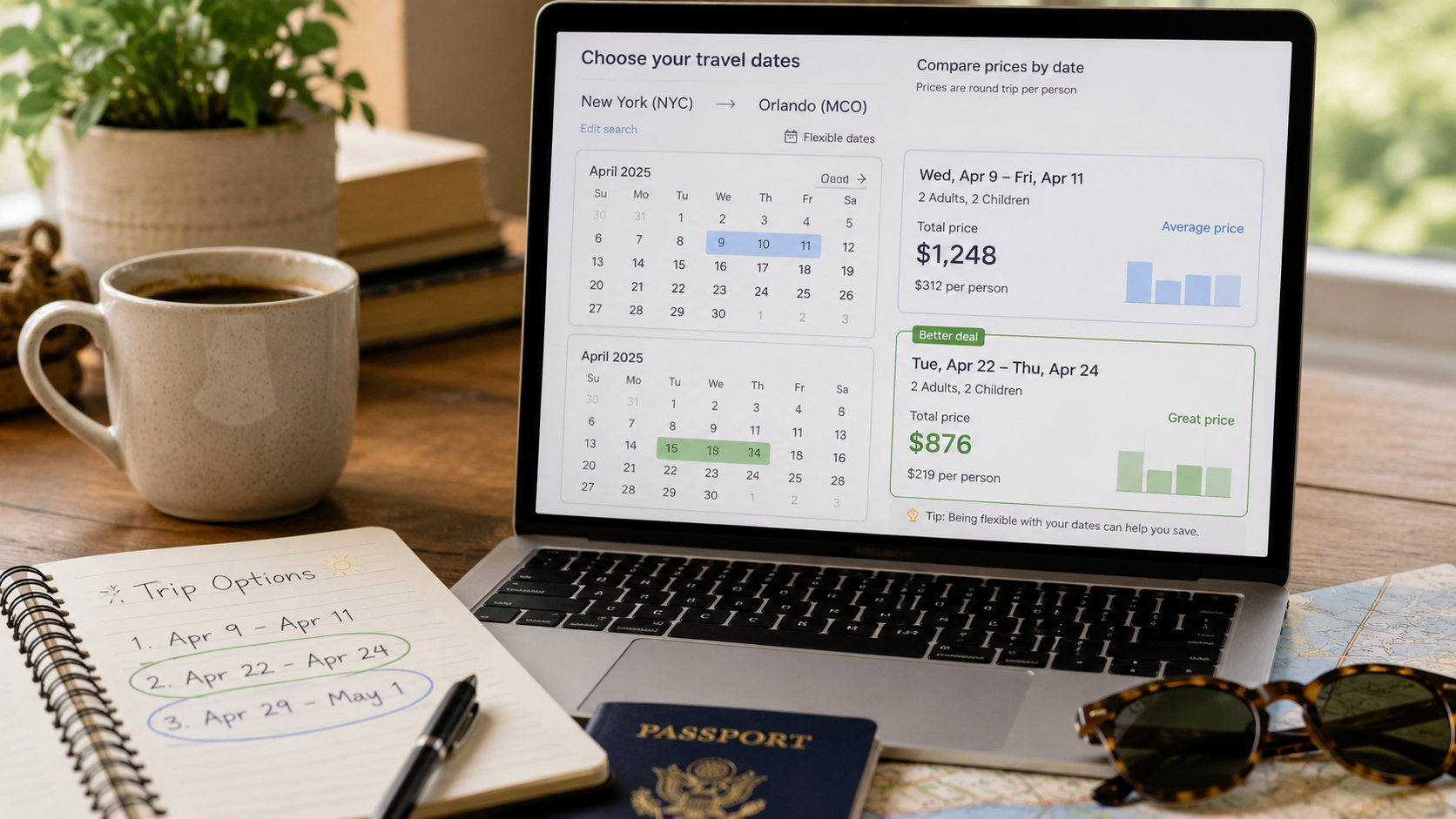
Smart vacation booking requires a comprehensive approach that goes beyond comparing just the hotel's direct website against major online travel agencies. To access the full spectrum of available pricing options and truly bypass hotel booking fees, you need to expand your search strategy across multiple channels.
This multi-channel approach should include checking the hotel's direct website for exclusive perks, reviewing major OTAs for package deals or flash sales, and most importantly, exploring wholesale travel booking platforms. These wholesale platforms offer contracted rates that aren't available to the general public, providing significant savings that bypass traditional booking site markups entirely.
Wholesale booking platforms operate with pre-negotiated rates that can offer substantial discounts compared to standard retail pricing found on conventional booking sites. These private hotel rates access points represent a largely untapped resource for travelers willing to invest time in comprehensive price comparison strategies.
By systematically checking all three channels—direct hotel websites, traditional OTAs, and wholesale platforms—you ensure access to pricing options that extend far beyond what's typically available through conventional booking methods, potentially uncovering deals superior to standard promotional offers.
Credit Card Points May Cost More Than You're Actually Saving
Calculate the Real Cost of Earning "Free" Travel Points Through Spending

The mathematics behind credit card points reveal a sobering reality that contradicts the "free travel" narrative. Earning enough points for meaningful travel rewards—typically 50,000 to 100,000 points for hotel stays—requires spending between $25,000 to $100,000 on a credit card. This substantial monetary investment represents a significant opportunity cost that frequently exceeds the actual value of the rewards earned.
When travelers focus exclusively on accumulating points, they often overlook the opportunity cost of their credit card spending. The money invested in earning these rewards could potentially generate better returns through alternative hotel booking strategies, such as direct negotiation with properties or accessing specialized platforms that offer immediate discounts without any spending commitments.
How Points Psychology Distracts from Finding Better Cash Prices

The psychological allure of "free" travel points creates a mental barrier that prevents travelers from conducting thorough research on current cash rates for accommodations. This tunnel vision effect causes many to become emotionally invested in using their accumulated rewards, leading to suboptimal redemptions where comparable cash rates would have provided superior value.
The emotional attachment to points often blinds travelers to immediate opportunities for hidden hotel discounts or private deals that could deliver better value than redemptions. Rather than searching for hotel deals better than Expedia or exploring alternatives to Black Friday hotel discounts, point-focused travelers miss out on legitimate savings opportunities that require no prior spending investment.
Avoid Adding to Credit Card Debt While Chasing Travel Rewards
The pursuit of travel points frequently leads to increased spending beyond normal budgets as travelers attempt to accelerate point accumulation. This behavior pattern often results in carrying credit card balances and incurring interest charges, which completely negate any potential savings from reward redemptions.
Smart travelers recognize the financial risks inherent in chasing credit card points hotel savings and instead focus on immediate cost-reduction strategies. By avoiding spending beyond established budgets or carrying balances, they can explore hotel rate parity bypass methods or private hotel deals that deliver immediate savings without the financial risks associated with points accumulation strategies.
Ready To Actually Start Saving On Travel?
The travel booking industry operates on hidden commission structures and rate parity agreements that create an illusion of choice while maintaining artificially high prices across major platforms. Expedia and other OTAs extract 15-33% commissions from hotels, while rate parity requirements prevent hotels from offering lower direct prices. This interconnected system explains why comparison shopping across traditional booking sites rarely yields meaningful savings, and why credit card points often mask the true cost of travel through increased spending.
Breaking free from this cycle requires accessing wholesale travel platforms that operate outside these restrictive agreements. Family for Adventure provides families with private hotel rates not available on public booking sites, allowing vacation budgets to stretch further without the complications of points programs or endless comparison shopping. When you're ready to plan your next trip, try Family for Adventure and discover how much you could save.