
How to Create a Family Vacation Budget That Actually Works
Family vacation planning can feel overwhelming when you're trying to balance making memories with making ends meet. This guide is for parents who want to take their families on amazing trips without going into debt or stressing about money.
Creating a family vacation budget that actually works means getting smart about your spending before you book anything. Most families skip the budgeting step and end up shocked by credit card bills that take months to pay off. You can avoid this trap by planning ahead and making strategic choices about where and when you travel.
We'll walk you through setting a realistic vacation budget that covers everything from flights to souvenirs. You'll learn how to choose destinations that give you the best bang for your buck and discover timing tricks that can cut your costs in half. Plus, we'll share practical tips for finding deals on transportation and hotels, planning for those sneaky hidden expenses, and actually sticking to your budget once you're on the road.
The best family vacations aren't necessarily the most expensive ones. With the right planning approach, you can create incredible experiences for your family while keeping your finances on track.
Set Your Vacation Budget Before You Plan Anything Else
Calculate what you can realistically afford for the entire trip
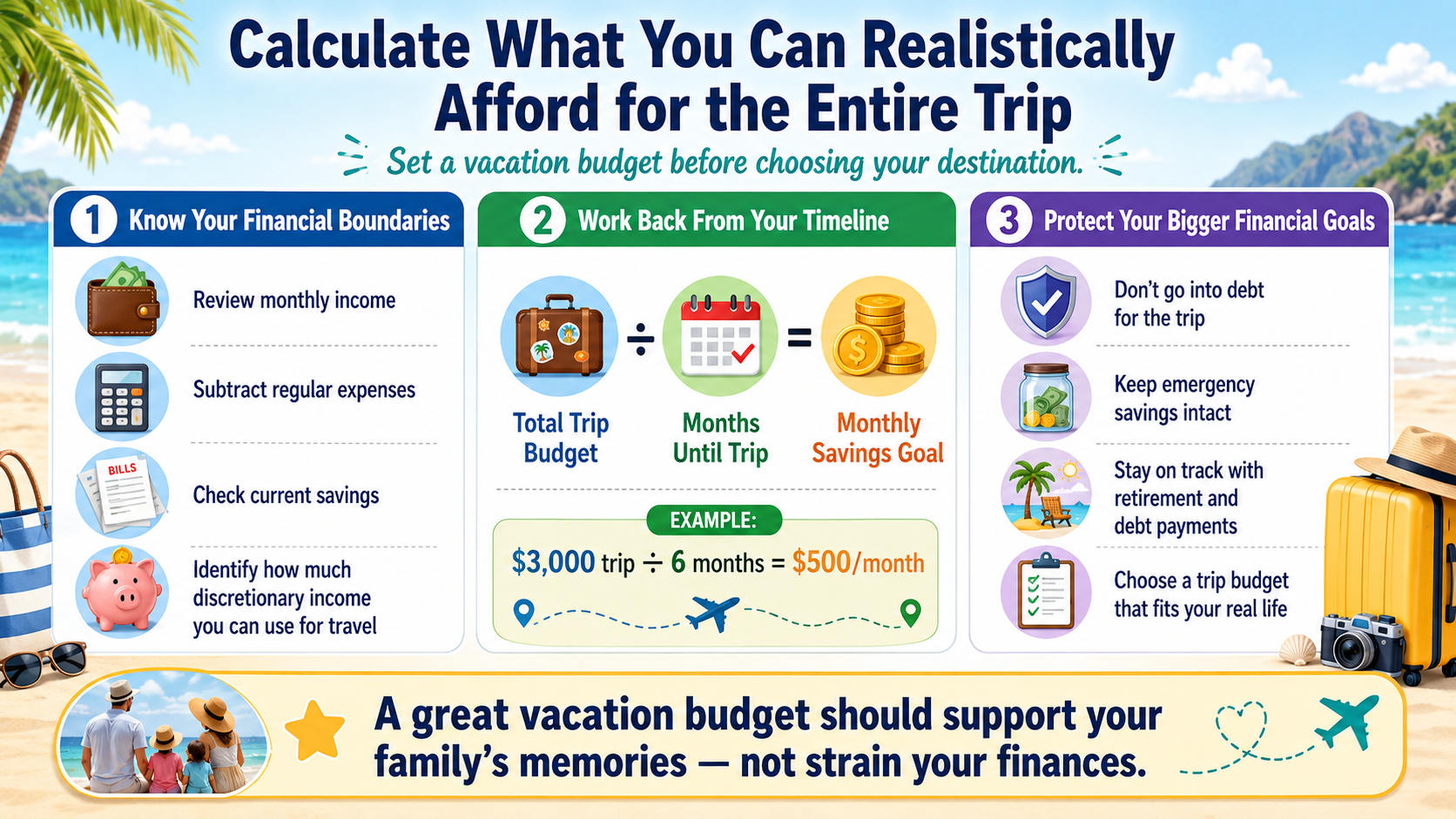
Creating a successful family vacation budget starts with determining your financial boundaries before falling in love with any specific destination. The foundation of effective vacation budgeting tips begins with an honest assessment of your current financial situation. Review your monthly income, existing expenses, and savings to identify how much discretionary income you can allocate toward your family travel budget planner.
Consider your timeframe for the trip and work backwards to establish a realistic savings target. If you're planning a vacation six months out, divide your total affordable amount by the number of months to create a manageable monthly savings goal. This approach ensures your vacation budget calculator reflects what you can genuinely afford without compromising your family's financial stability or going into debt.
Remember that your vacation savings plan should complement, not compete with, other financial priorities like emergency funds, retirement savings, or debt payments. A well-planned family vacation budget considers your overall financial health, ensuring that your trip enhances rather than strains your family's economic wellbeing.
Include all expenses from transportation to souvenirs
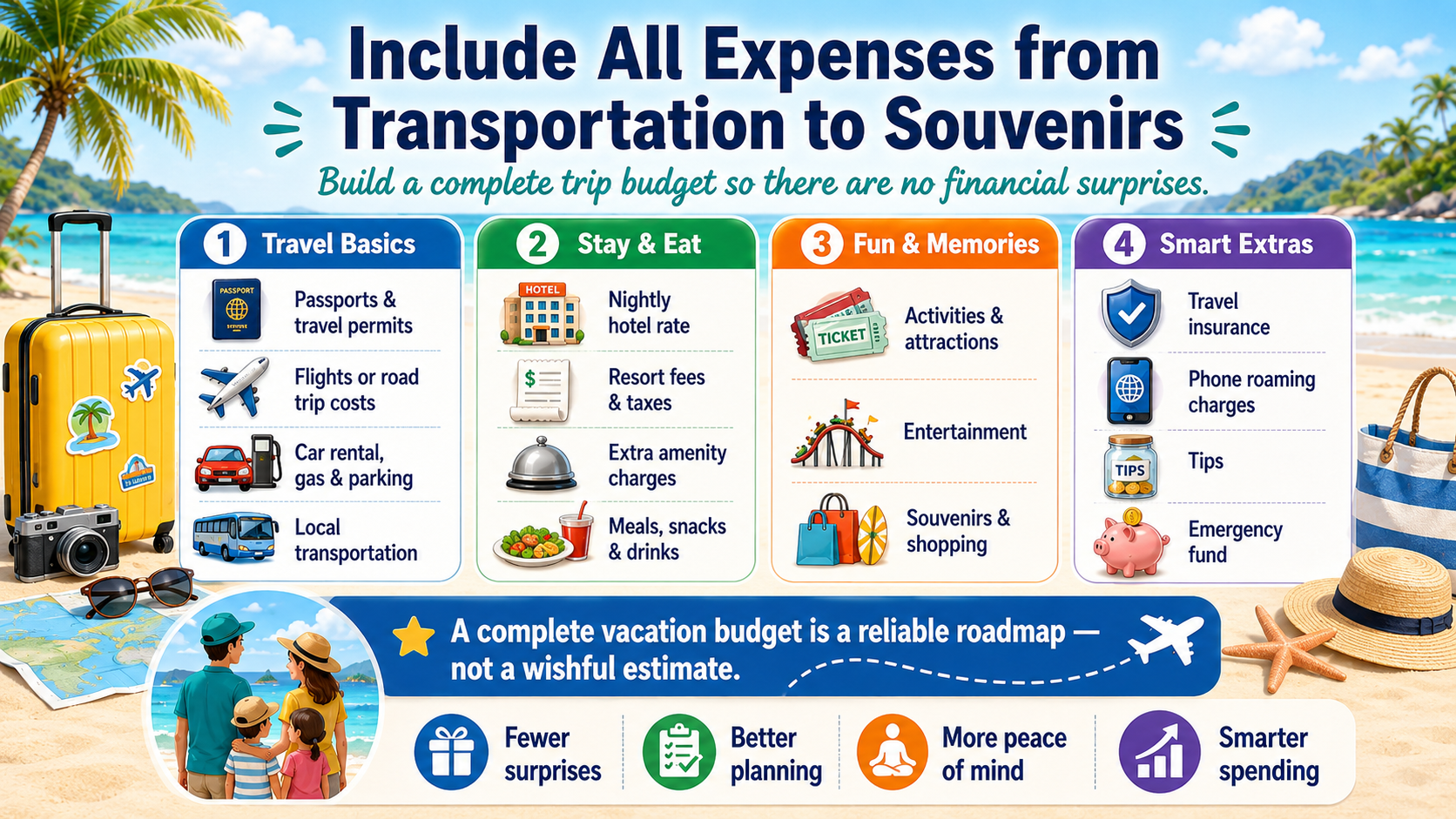
When developing your family vacation budget, it's crucial to account for every potential expense to avoid unpleasant financial surprises. Your comprehensive budget family trip planning should encompass all necessary expenses, starting with essential documentation like passports and travel permits, which are often overlooked in initial calculations.
Transportation costs form a significant portion of your budget, including flights, car rentals, gas, parking fees, and local transportation at your destination. Accommodation expenses should factor in not just nightly rates but also resort fees, taxes, and any additional charges for amenities.
Food and dining expenses can quickly spiral without proper planning, so allocate funds for meals, snacks, and beverages throughout your trip. Don't forget to budget for activities, entertainment, and attractions that will make your vacation memorable. Additionally, set aside money for souvenirs and shopping, as these purchases often represent cherished memories of your family vacation cost breakdown.
Include practical expenses like travel insurance, phone roaming charges, tips, and emergency funds. By accounting for these comprehensive costs upfront, your family vacation budget becomes a reliable roadmap rather than a wishful estimate.
Choose between budget-first or destination-first planning approach
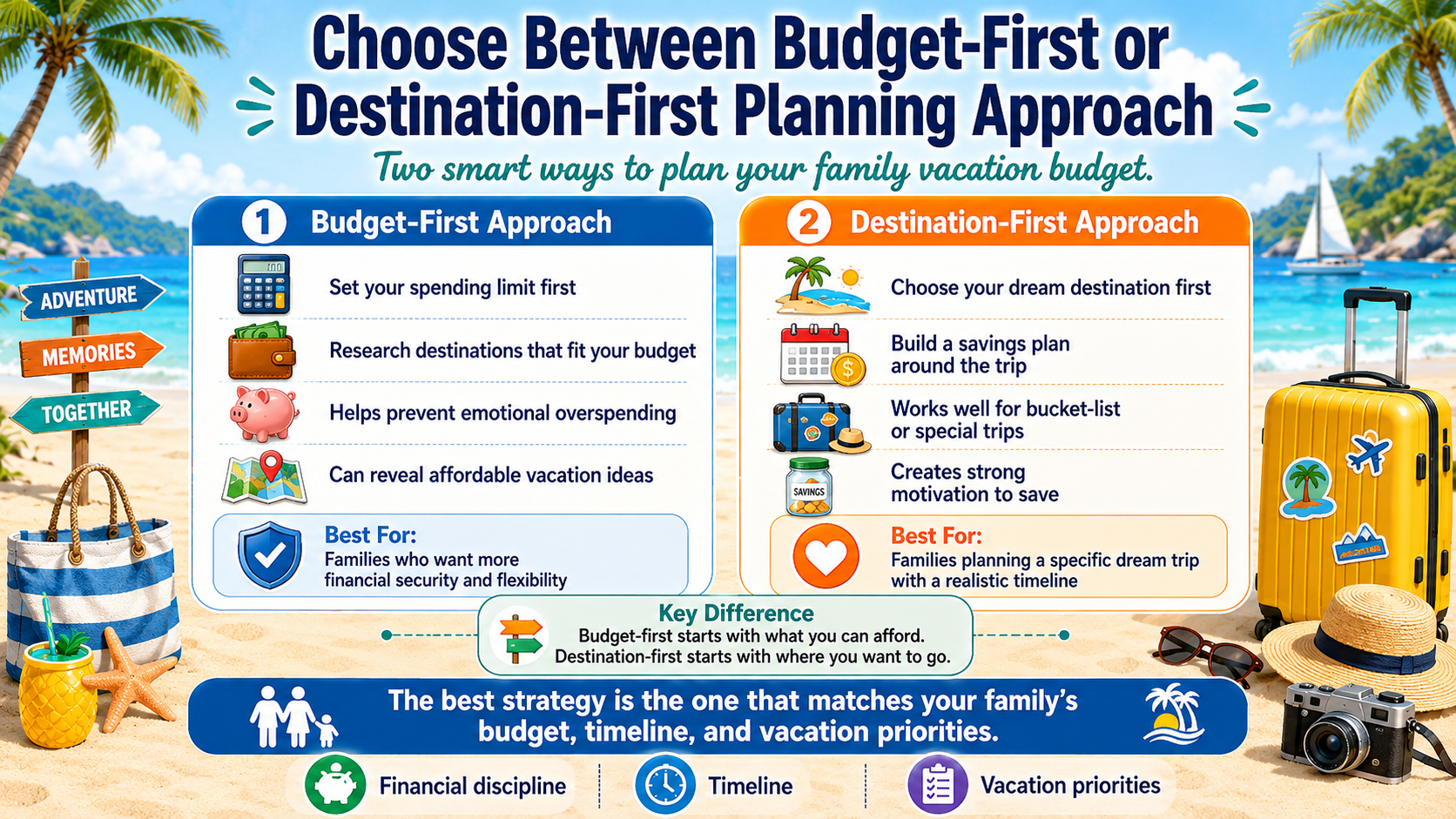
Two distinct strategies can guide your vacation planning process, each offering unique advantages depending on your family's priorities and financial situation. Understanding these approaches helps you create a more focused and realistic family vacation budget that aligns with your specific circumstances.
The budget-first approach involves establishing your spending limit before considering destinations. This method ensures financial discipline and prevents emotional overspending on dream destinations that exceed your means. With this strategy, you determine your affordable amount and then research cheap family vacation destinations that fit within your predetermined budget. This approach often leads to discovering affordable family vacation ideas you might not have otherwise considered.
Conversely, the destination-first approach allows you to select your preferred location and then develop a savings plan to make it financially feasible. This method works well when you have a specific destination in mind for special occasions or bucket-list experiences. The key is creating a realistic timeline and savings strategy that accommodates the higher costs associated with premium destinations.
Both approaches can be effective when executed properly. The budget-first method typically offers more financial security and flexibility, while the destination-first approach can provide stronger motivation for saving and budget adherence. Choose the strategy that best matches your family's financial discipline, timeline, and vacation priorities.
Choose Your Destination Strategically to Maximize Value
Select locations within driving distance for smaller budgets

When working with a limited family vacation budget, choosing destinations within driving distance can dramatically reduce your overall travel costs. Instead of purchasing multiple airline tickets for your family members, which can easily consume a significant portion of your vacation budget calculator totals, opt for road trip destinations that eliminate airfare expenses entirely. Driving also means you avoid additional costs like car rentals at your destination, as you'll already have your own vehicle available for local transportation and sightseeing activities.
The financial benefits of driving extend beyond just transportation savings. You'll have complete control over your travel schedule, allowing you to pack meals and snacks for the journey, further reducing food expenses. Additionally, you can bring more luggage without worrying about airline baggage fees, enabling you to pack everything your family needs for affordable family vacation ideas without additional costs.
Consider staying with family or friends for free accommodation

One of the most effective budget family trip planning strategies involves leveraging your personal network for free accommodation. Staying with family or friends can eliminate what is typically the second-largest expense in any family travel budget planner after transportation costs. This approach not only provides significant savings but also offers the added benefit of spending quality time with loved ones while creating memorable experiences together.
Free accommodation through personal connections often comes with additional perks that hotels cannot provide, such as local insider knowledge, home-cooked meals, and built-in babysitting options. Your hosts can recommend cheap family vacation destinations and activities in their area that might not appear in typical tourist guides, helping you discover authentic experiences while maintaining your family vacation budget constraints.
Find alternative destinations that offer similar experiences for less

If your dream destination exceeds your current family vacation budget, research alternative locations that provide similar experiences at a fraction of the cost. This strategic approach to vacation budgeting tips allows you to enjoy the type of vacation you desire without breaking your financial limits. For instance, if an expensive beach resort is beyond your budget, consider exploring lesser-known coastal areas that offer beautiful beaches, water activities, and relaxation opportunities without the premium pricing.
When researching alternatives, focus on destinations that provide the core experiences your family seeks rather than specific locations. Mountain destinations can offer hiking, scenic views, and outdoor adventures regardless of whether they're famous ski resorts or hidden gems in national forests. This mindset shift in your vacation savings plan opens up numerous possibilities for budget-friendly family travel while still delivering the vacation memories and experiences your family desires.
Time Your Trip to Take Advantage of Off-Season Savings
Travel during less popular times of year for lower costs

Strategic timing is one of the most effective vacation budgeting tips that families often overlook when creating their family vacation budget. Off-season travel can deliver substantial savings across every aspect of your family travel budget planner, from accommodations to activities. Businesses in tourist destinations are especially eager for customers during quieter periods, which translates to significantly lower prices for families willing to be flexible with their timing.
Consider planning your affordable family vacation ideas around shoulder seasons and less popular travel windows. For beach destinations, early spring and winter months offer dramatically reduced rates on hotels, resorts, and vacation rentals. Mountain destinations typically see lower prices during non-ski seasons, while city breaks become more budget-friendly during weekdays and months when business travel is lighter.
Avoid peak summer travel when 62% of people vacation

Understanding travel patterns is crucial for effective budget family trip planning. With 62 percent of travelers choosing summer months for their vacations, competition for accommodations and transportation reaches its peak, driving prices to their highest levels. This concentrated demand creates a perfect storm for inflated costs that can quickly derail your family vacation cost breakdown.
By choosing alternative travel periods, your vacation savings plan benefits from reduced competition and increased availability. Spring break alternatives, early fall trips, and winter getaways to warm destinations can offer the same experiences at a fraction of summer costs. This strategic approach to timing helps maximize your cheap family vacation destinations budget while avoiding the crowds that characterize peak season travel.
Book well in advance to secure better rates and payment plans
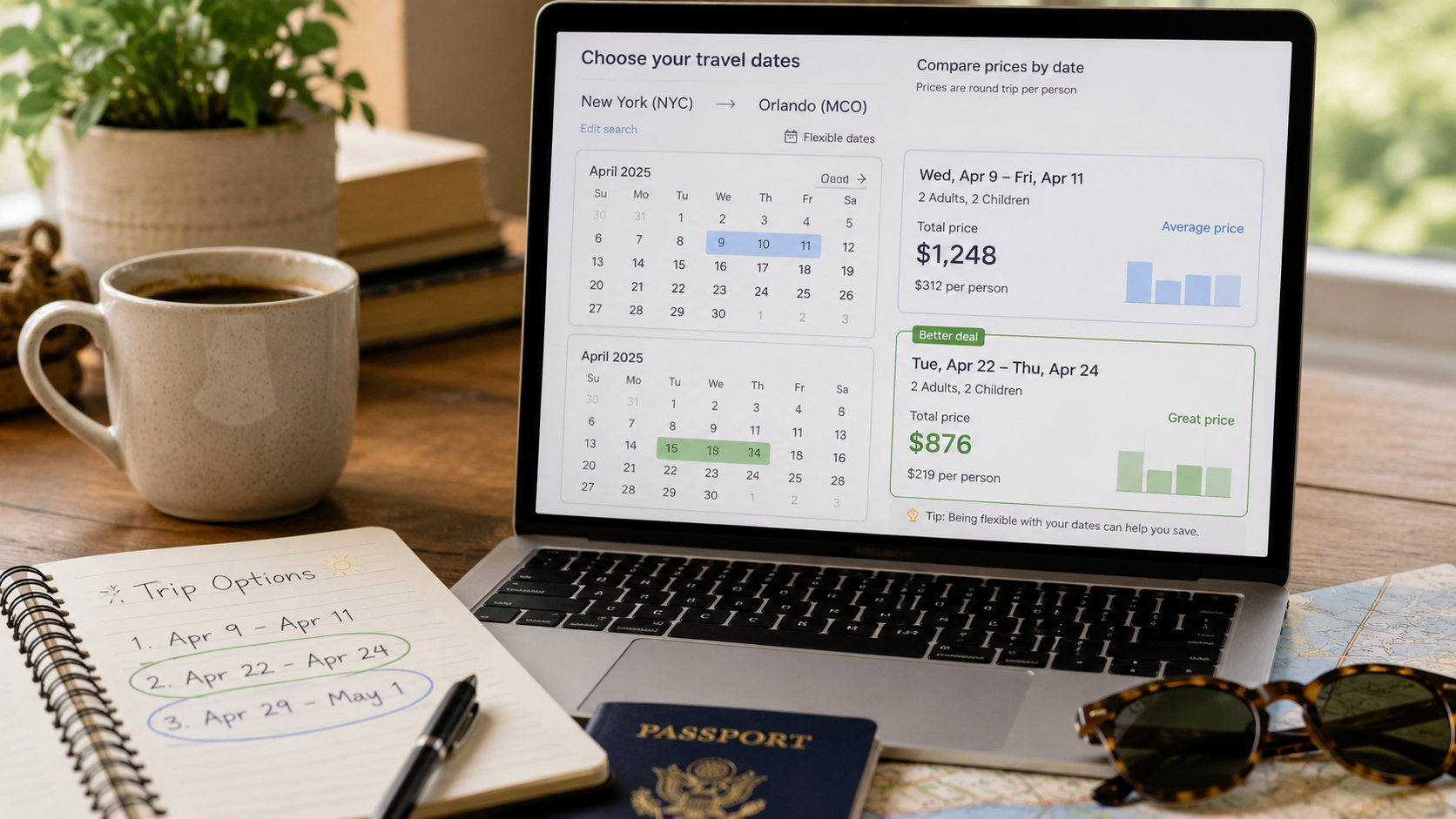
Early booking strategies play a vital role in how to budget for family vacation expenses effectively. Securing reservations well ahead of your travel dates provides access to significant discounts that aren't available to last-minute bookers. Many resorts and retreat centers offer substantial early-bird pricing that can reduce your overall vacation costs by hundreds or even thousands of dollars.
Advanced booking also opens opportunities for payment plans, allowing you to spread vacation costs over several months rather than paying everything upfront. This approach makes expensive family trips more manageable by breaking down large expenses into smaller, budget-friendly monthly payments. When combined with off-season timing, early bookings create a powerful strategy for affordable family vacation planning.
Find the Best Deals on Flights & Hotels
Use Strategic Booking Tactics for Flights

When it comes to securing the best deals for your family vacation budget, timing and strategy make all the difference in transportation and accommodation costs. For airfare, implementing specific booking tactics can lead to substantial savings. The optimal time to purchase flights is at 3 p.m. on Tuesdays, booking no less than six weeks before your departure date. This timing takes advantage of airlines' pricing algorithms and reduces competition from other travelers browsing during peak hours.
Also flying on a weekday instead of a weekend can make a big difference in the price as well. If your schedule allows consider changing your travel dates from a Saturday through Saturday, to a Wednesday through Wednesday.
Finding The Right Hotel For Your Family

Finding the right hotel for your family is not always about booking the cheapest room or choosing the place with the most amenities. It is about knowing what matters most for your trip. Some families may want a resort-style property with pools, restaurants, and activities because they plan to spend a lot of time there. Others may only need a clean, comfortable place to sleep because most of the trip will be spent exploring the destination.
Before you book, think about what your family will actually use. If you will not spend much time at the hotel, you may not need to pay extra for a luxury resort, upgraded room, or premium amenities. But if the hotel is a big part of the vacation experience, it may be worth spending more for the pool, location, free breakfast, kitchen space, or family-friendly activities. The goal is to avoid overpaying for things you do not need while focusing your budget on the parts of the trip your family will enjoy the most.
How To Get The Best Deal On Your Hotel

Getting the best deal on your hotel starts with knowing where the real savings come from. Most families search the same public booking sites and end up seeing the same marked-up hotel prices over and over again. Family for Adventure was created to give families a better way to book by helping cut out the extra middleman costs and giving members access to private hotel and resort rates that are not typically shown on public travel sites.
Before you book your next hotel, check Family for Adventure to see how much you could save. Even a small difference per night can add up quickly on a family vacation, especially when you are staying several nights. Compare your options, see the savings for yourself, and make sure more of your vacation budget goes toward the memories instead of the markup. 👉Try Family for Adventure for yourself and see how much you could save.
Plan for Hidden Costs and Unexpected Expenses
Budget for Travel Documents, Tips, and Transportation
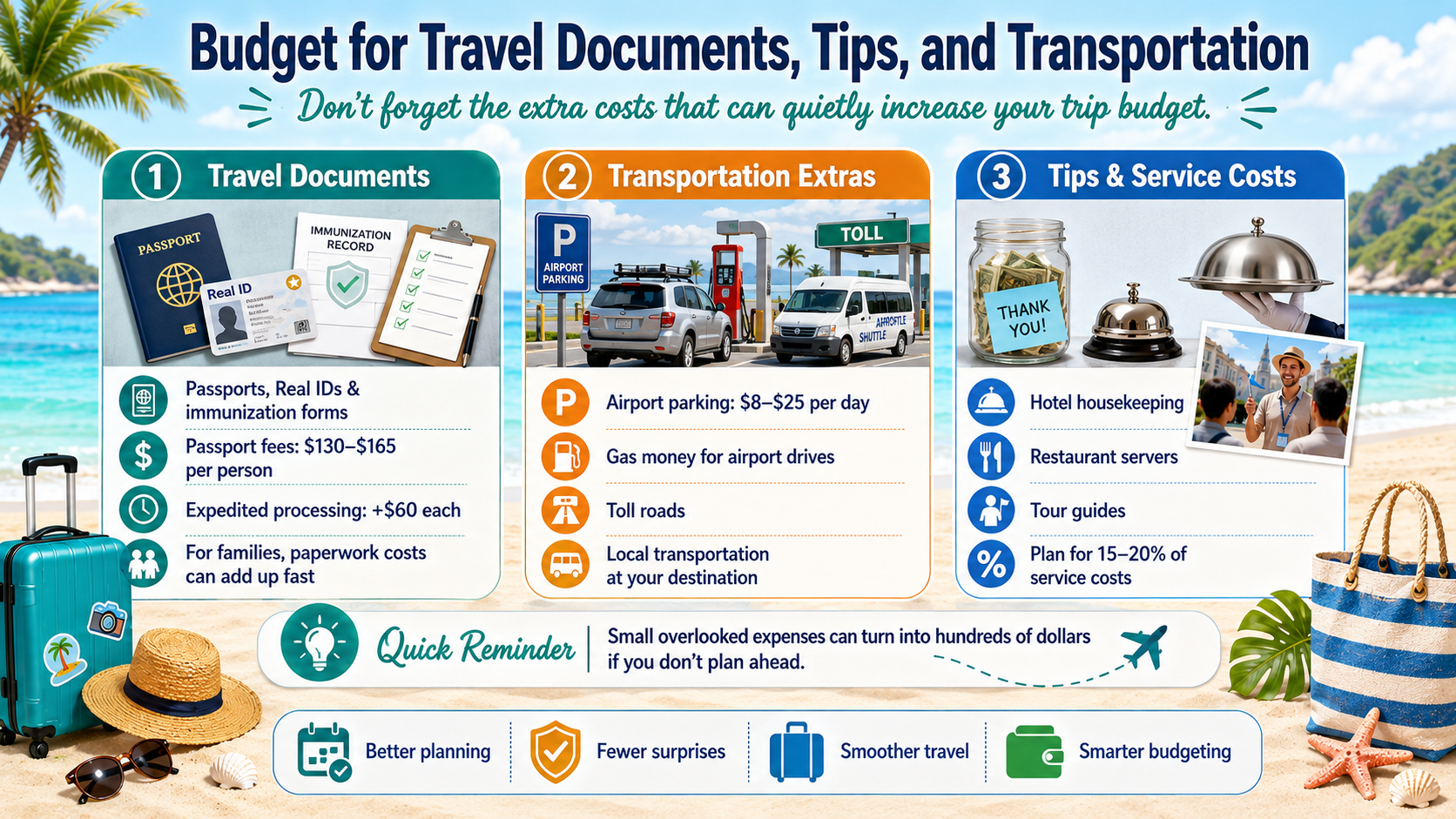
When creating your family vacation budget, essential travel documents represent often-overlooked expenses that can significantly impact your overall costs. Budget for critical paperwork like passports, Real IDs, and immunization forms, ensuring they are acquired well ahead of your departure date. Passport fees alone can range from $130-$165 per person, with expedited processing adding another $60 per application. For families of four or five, these costs quickly accumulate into hundreds of dollars that must be factored into your vacation budget calculator.
Beyond documentation, transportation costs extend far beyond your initial flight or hotel booking. Consider parking fees at airports, which can range from $8-$25 per day depending on your location. Factor in gas money for driving to airports, potential toll roads, and local transportation at your destination. Tips for service providers like hotel housekeeping, restaurant servers, and tour guides should also be incorporated into your family travel budget planner, typically accounting for 15-20% of service costs.
Account for Immunizations and Travel Requirements
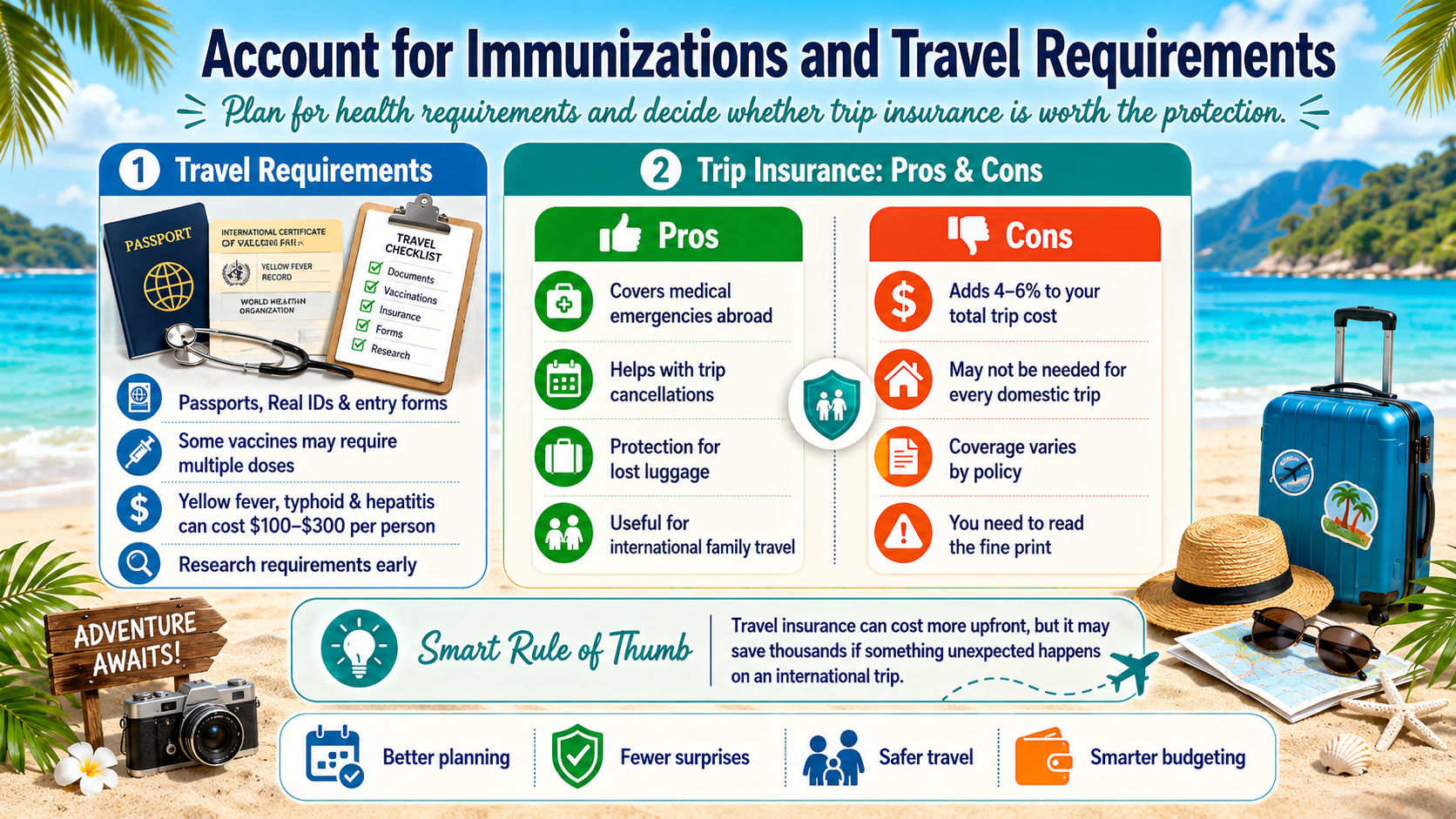
International family travel often requires specific health preparations that impact your vacation budgeting tips strategy. Research destination-specific immunization requirements early, as some vaccines require multiple doses over several weeks or months. Yellow fever, typhoid, and hepatitis vaccinations can cost $100-$300 per person, depending on your healthcare provider and insurance coverage.
Travel insurance represents another crucial consideration for your family vacation cost breakdown. While optional for domestic trips, international travel insurance protects against medical emergencies, trip cancellations, and lost luggage. Policies typically cost 4-6% of your total trip value but provide essential financial protection for unexpected medical expenses abroad.
Create a Slush Fund for Spontaneous Activities

Even the most detailed budget family trip planning should include flexibility for unexpected opportunities. Establish a separate fund representing 10-15% of your total vacation budget for spontaneous activities, emergency expenses, or irresistible local experiences. This cushion prevents overspending on planned activities when unexpected costs arise, such as weather-related itinerary changes or discovering must-see attractions not included in your original plans.
This emergency fund also covers potential price fluctuations in local markets, currency exchange fees, and small purchases that enhance your family's travel experience without derailing your carefully planned budget.
Save Systematically for Your Vacation
Set up automatic monthly transfers to a dedicated vacation account
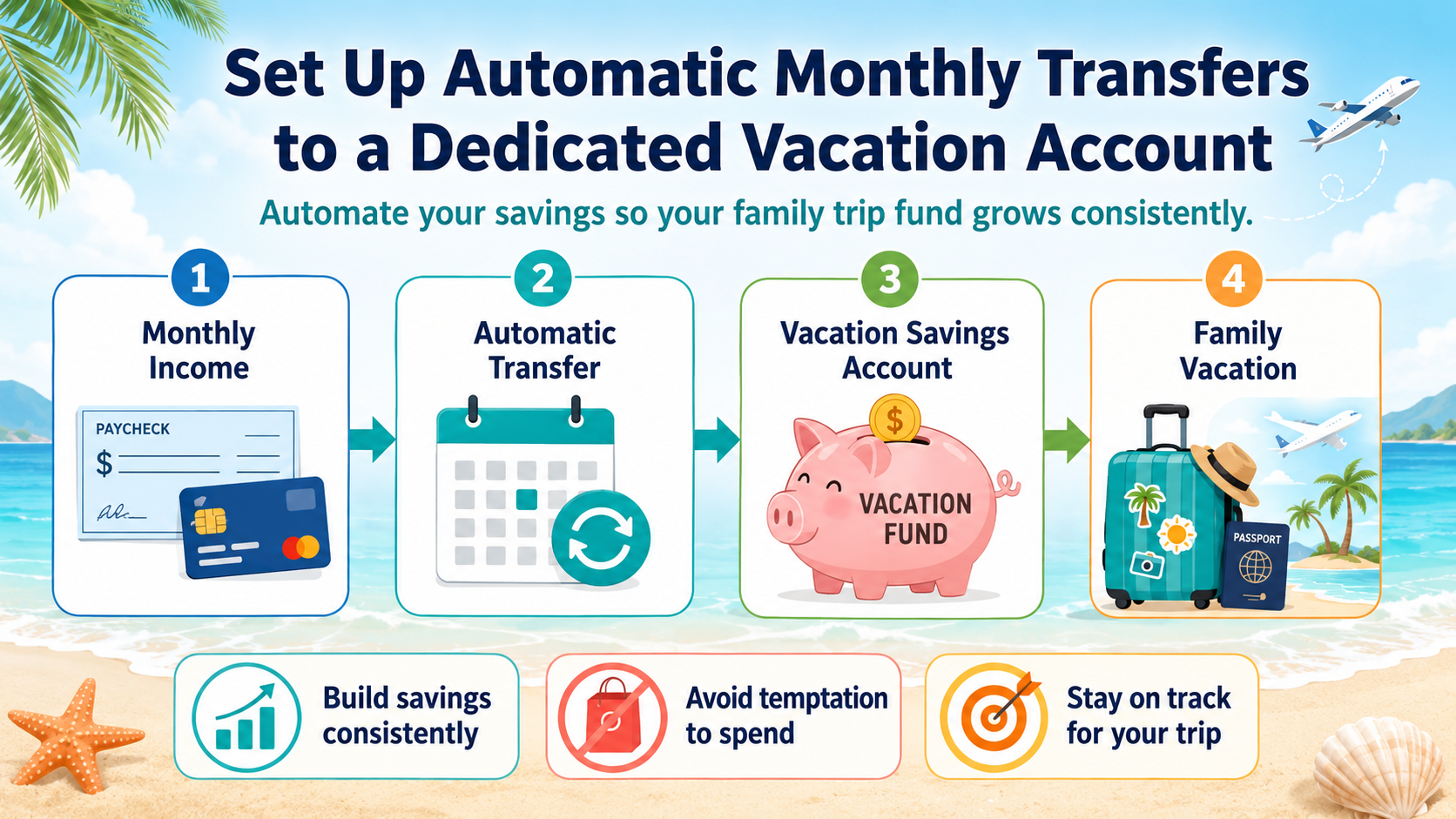
The foundation of any successful vacation savings plan lies in automating the process. By establishing automatic monthly transfers to a dedicated vacation savings account, you remove the temptation to spend money earmarked for your family vacation budget. A vacation Club savings account serves as an excellent option, as these specialized accounts are designed specifically for travel-related expenses and often provide better interest rates than standard savings accounts.
Setting up these automatic transfers ensures consistency in your vacation budgeting approach, regardless of your monthly cash flow fluctuations. When the transfer happens automatically, you're less likely to skip months or reduce contributions when other expenses arise. This systematic approach transforms vacation saving from a sporadic effort into a reliable component of your overall family travel budget planner strategy.
Calculate monthly savings needed based on trip timeline
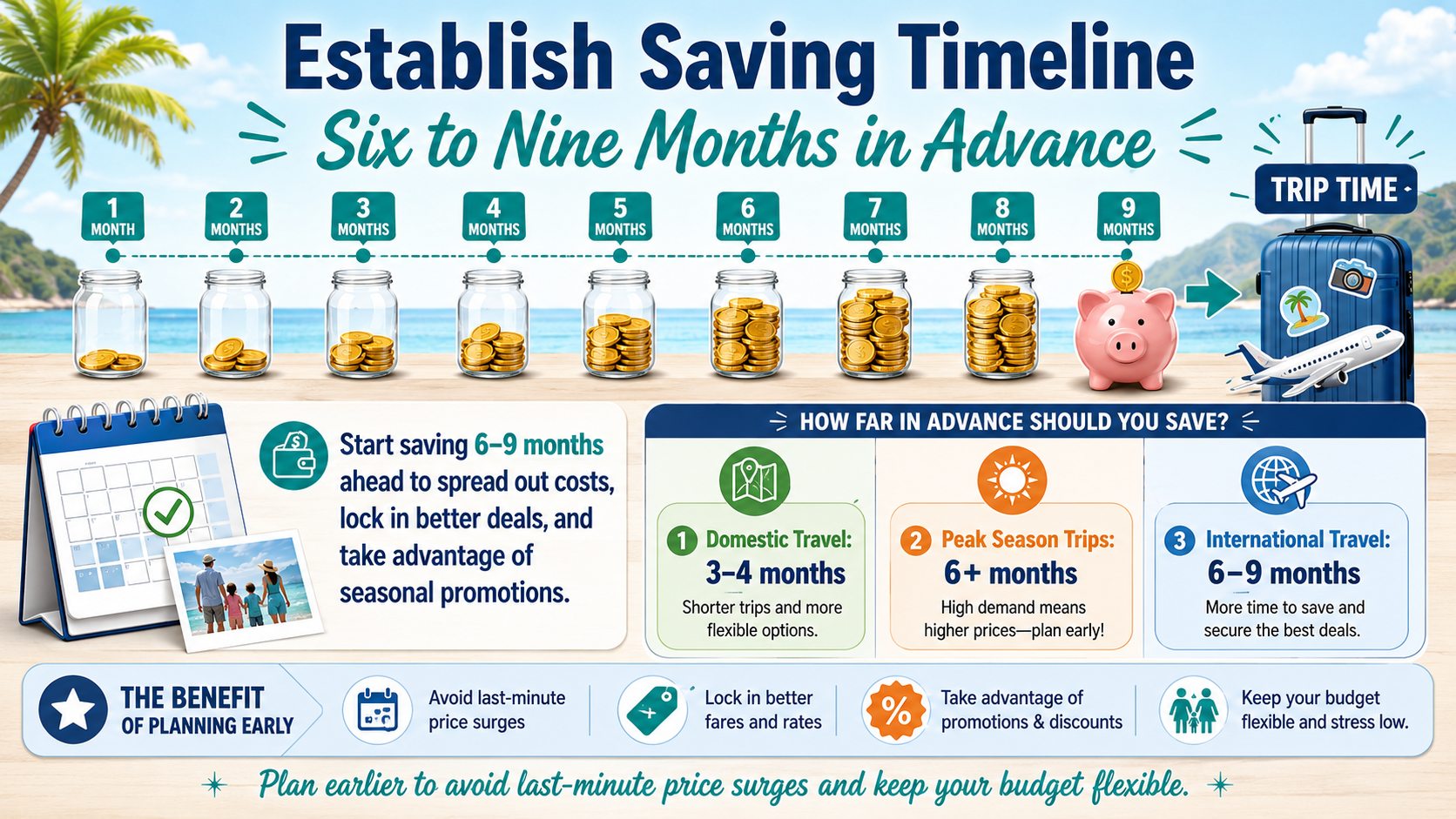
Creating an effective vacation savings plan requires precise calculations based on your departure date. To determine the exact monthly contribution needed, you must first establish the total cost of your family vacation and identify the number of months available for saving. This calculation forms the backbone of your vacation budget calculator approach.
The timeline factor is crucial because it directly impacts the monthly payment amount you'll need to commit. A longer timeline allows for smaller monthly contributions, making the savings goal more manageable for most families. Conversely, shorter timelines require larger monthly commitments but can help maintain momentum and focus toward your travel goals.
Divide total cost by months until departure for manageable payments
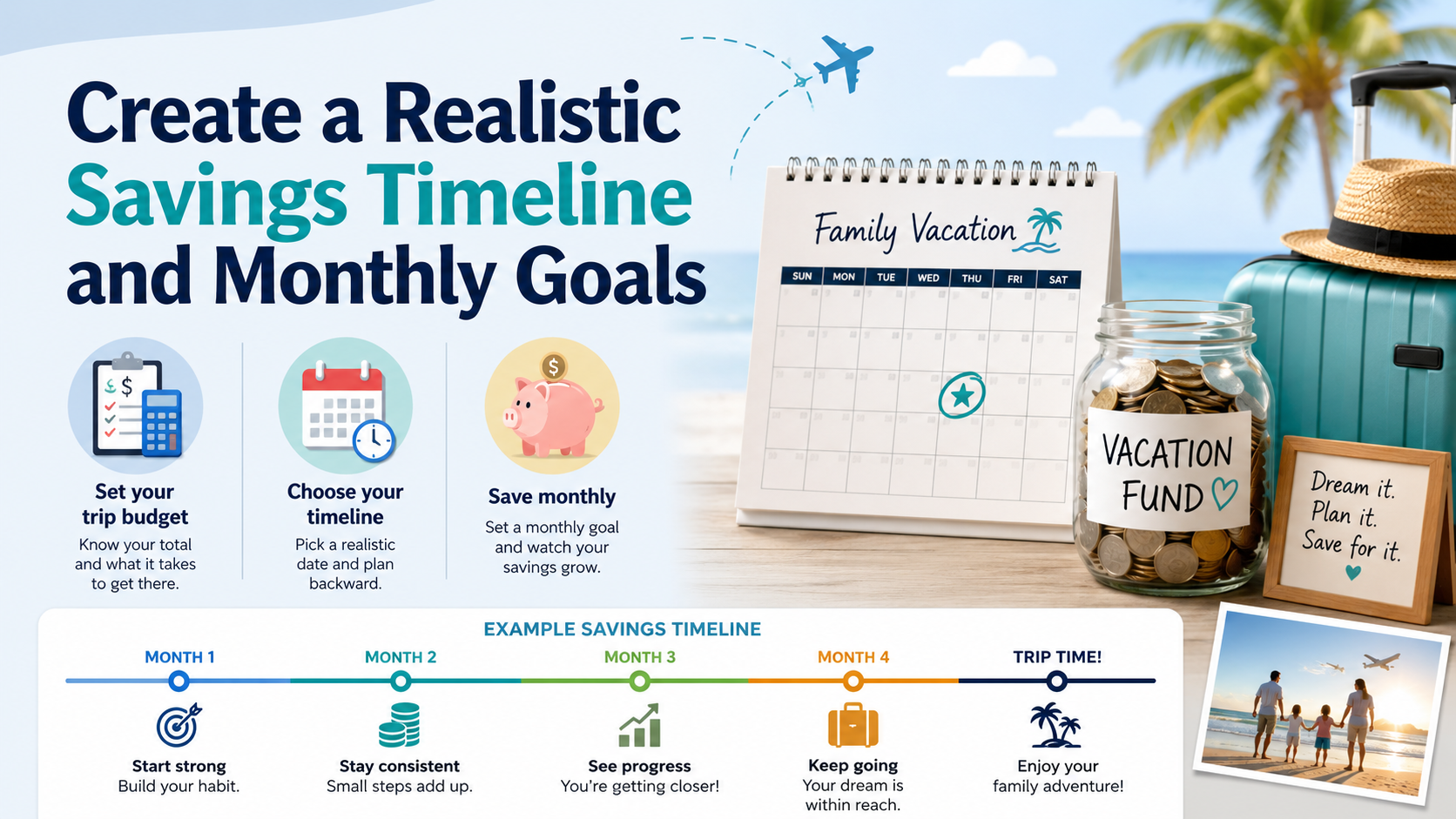
The most straightforward method for creating manageable vacation savings involves dividing your total trip cost by the available months until departure. For example, if a trip costs $2,000 and is 6 months away, aim to save about $333 per month. This mathematical approach provides clarity and removes guesswork from your family vacation budget planning process.
This division strategy works particularly well because it breaks down what might seem like an overwhelming expense into digestible monthly payments. When you see that your dream family vacation requires the same monthly commitment as many other regular expenses, it becomes much more achievable and less intimidating to pursue.
Stick to Your Budget While Traveling
Resist the Urge to Overspend on Unplanned Activities

Now that we have covered the importance of planning and saving for your family vacation budget, the real test begins when you're actually on your trip. One of the biggest threats to your carefully crafted vacation budget calculator is the temptation to participate in unplanned activities that weren't accounted for in your original budget family trip planning. These spontaneous decisions, while exciting in the moment, can quickly derail your family vacation budget and leave you with unexpected expenses.
When you're in vacation mode, it's easy to justify additional costs by thinking "we're already here" or "it's a once-in-a-lifetime experience." However, these unplanned activities can range from expensive tourist attractions to premium dining experiences that weren't part of your initial vacation budgeting tips strategy. The key is to remain mindful of your predetermined spending limits and remember that sticking to your budget doesn't mean sacrificing fun—it means ensuring you can afford the experiences you've already planned without financial stress.
Use Self-Discipline to Avoid Budget-Busting Impulse Purchases

Previously, I've emphasized the importance of creating a solid foundation for your family vacation budget, but maintaining that discipline while traveling requires a different kind of commitment. Exercise self-discipline to avoid exceeding the budget you are comfortable with, as impulse purchases are often the culprit behind vacation overspending. These can include everything from overpriced souvenirs and resort merchandise to upgraded meal plans and premium experiences that seem appealing in the moment.
The vacation environment is specifically designed to encourage spending, with attractive displays, limited-time offers, and the psychological pressure of being in a special place. However, successful vacation budgeting tips include setting clear boundaries before you travel and sticking to them regardless of the circumstances. Consider implementing practical strategies such as carrying only the cash you've allocated for discretionary spending, leaving credit cards in your hotel safe for true emergencies, or establishing a family rule that any purchases over a certain amount require a waiting period and group discussion.
Explore Budget-Friendly Vacation Options
Choose all-inclusive cruises or resorts for predictable costs

When exploring affordable family vacation ideas, all-inclusive cruises and resorts stand out as exceptional choices for maintaining a predictable family vacation budget. These vacation options can offer serious savings because food and additional charges are typically included in the upfront cost, eliminating the guesswork from your vacation budgeting tips strategy.
All-inclusive packages create transparency in your family travel budget planner by bundling accommodation, meals, drinks, and often entertainment into one comprehensive price. This approach helps families avoid the common pitfall of unexpected dining expenses that can quickly derail even the most carefully crafted vacation savings plan. Instead of worrying about restaurant costs, activity fees, or resort charges, families can enjoy their vacation knowing that most expenses are already covered.
Cruises particularly excel in this area, offering multiple dining venues, entertainment options, and activities without additional per-person charges. Similarly, all-inclusive resorts provide unlimited access to restaurants, pools, recreational facilities, and often kids' clubs, making them ideal for budget family trip planning.
Visit National Parks for low-cost camping and activities

National Parks represent one of the most compelling cheap family vacation destinations available to American families. These natural treasures offer super-low rates for camping while providing built-in attractions that deliver exceptional value for your family vacation budget.
The camping fees at National Parks are remarkably affordable, often costing less per night than a single meal at a restaurant in tourist areas. This dramatic cost difference allows families to extend their vacation duration without significantly impacting their overall vacation cost breakdown. Beyond the low accommodation costs, National Parks provide countless free activities including hiking trails, wildlife viewing, ranger programs, and scenic drives.
The built-in attractions within National Parks eliminate the need for expensive entertainment venues or admission fees to multiple tourist attractions. Families can spend days exploring diverse landscapes, participating in educational programs, and creating lasting memories without constantly reaching for their wallets. This makes National Parks an excellent foundation for any vacation budget calculator, as the primary expenses remain predictable and minimal.
Explore Washington DC for free museums and attractions

Washington, D.C. emerges as a premier destination for budget-conscious families seeking world-class attractions without the premium price tag. The nation's capital offers an impressive array of free attractions that can form the centerpiece of an affordable family vacation.
The city boasts 17 Smithsonian museums, each offering extensive collections and educational experiences at no cost to visitors. From the Natural History Museum to the Air and Space Museum, families can spend multiple days exploring these world-renowned institutions without any admission fees impacting their family travel budget planner.
Beyond the museums, Washington, D.C. provides additional free attractions including the National Zoo and various memorials scattered throughout the city. The National Zoo houses thousands of animals and offers educational programs, while the memorials provide opportunities for both sightseeing and learning about American history. These attractions collectively create a comprehensive vacation experience that supports effective budget family trip planning.
The abundance of free activities in Washington, D.C. allows families to allocate their vacation savings toward accommodation and transportation rather than entertainment, making it an ideal destination for those implementing strict vacation budgeting tips.
Ready For Your Next Vacation...
Creating a family vacation budget that actually works requires strategic planning, disciplined saving, and smart decision-making throughout the entire process. By setting your budget first, choosing destinations that maximize value, timing your trips for off-season savings, and systematically saving for your vacation, you can avoid the post-trip financial stress that affects so many families. Remember to account for hidden costs, stick to your spending plan while traveling, and consider budget-friendly options like national parks, all-inclusive resorts, or destinations with free attractions.
And before you book your hotel or resort, make sure you compare your options to make sure you are getting the best deal. Family for Adventure was created to help families find better travel savings so they can spend less on the booking and more on the memories. 👉 Try it out and see how much you could save on your next trip.