
Where to Get Bigger Hotel Discounts Than the Ones Listed on Expedia
Finding better hotel deals than what's available on Expedia isn't impossible - you just need to understand how the travel booking industry actually works. Most travelers don't realize that major booking sites like Expedia, Hotels.com, and Booking.com often show nearly identical prices because they're all connected to the same pricing systems and distribution networks.
This guide is for budget-conscious travelers, families planning vacations, and anyone tired of seeing the same high prices across multiple travel sites. You'll discover why "shopping around" on traditional booking platforms rarely produces different results and learn about alternative booking methods that can actually save you money.
We'll reveal how online travel agencies control hotel pricing through hidden commission structures that keep rates artificially high across platforms, explain why booking directly with hotels doesn't guarantee better prices due to rate parity agreements, and show you how to access private hotel rates that bypass traditional booking site markups. You'll also learn why your credit card points may cost more than you're actually saving, and discover booking strategies that can help your travel budget go further.
How OTAs Control Hotel Pricing Through Hidden Commission Structures
Understanding the 15-33% Commission Fees Hotels Pay to Booking Sites
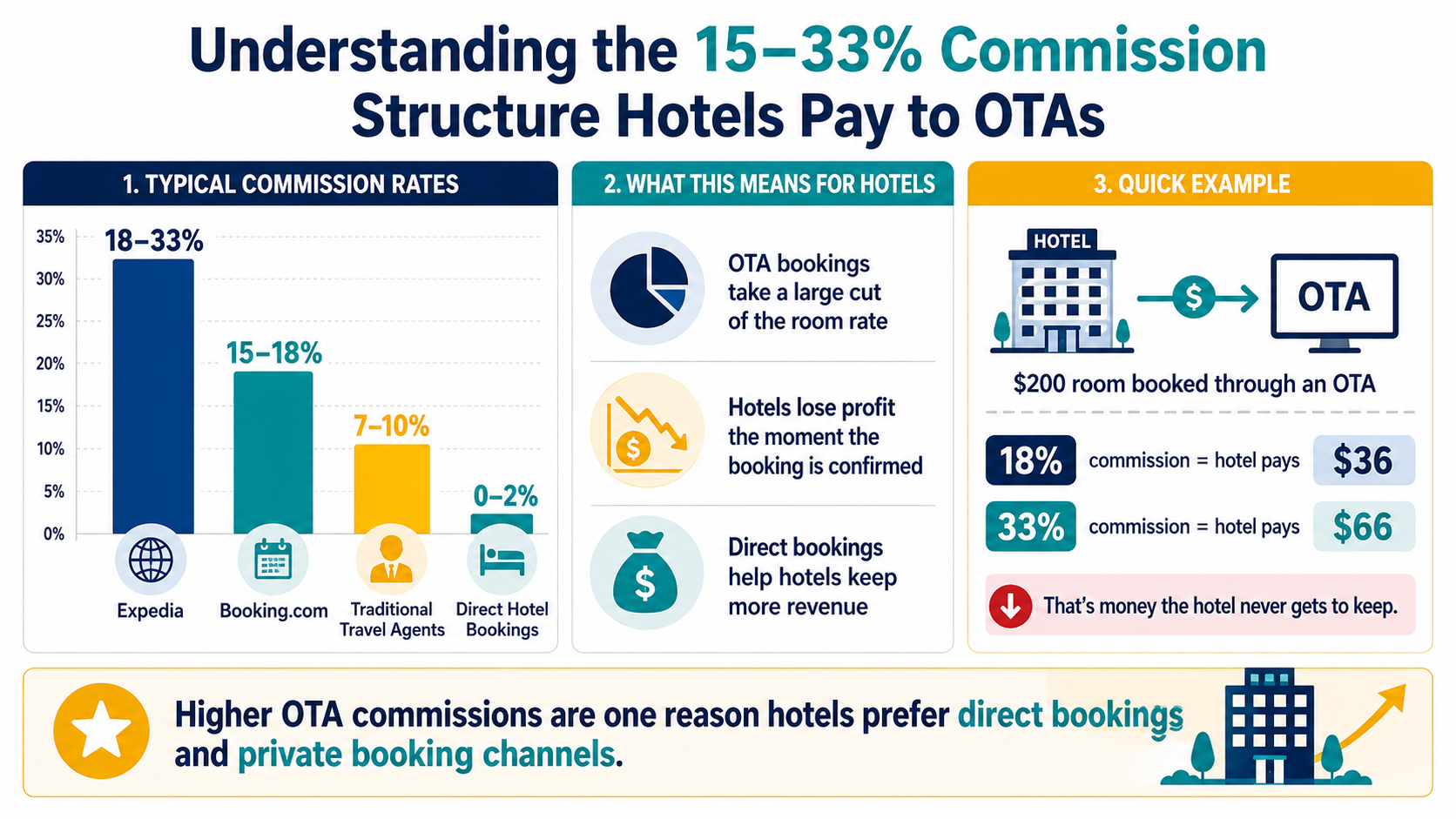
When you book a hotel through major travel booking platforms, a substantial portion of your payment never reaches the hotel itself. Expedia charges between 18-33% of the room rate, while Booking.com typically charges 15-18% in commission fees. These percentages represent significant cuts that hotels must pay for each reservation made through these online travel agencies (OTAs).
To put this in perspective, traditional travel agents generally command lower commissions around 7-10%, and direct hotel bookings may only incur 0-2% in processing fees. This dramatic difference reveals how hotels essentially refund 10-20% of the room cost to OTAs, which represents profit loss for hotels, as OTAs often provide minimal added value beyond basic booking facilitation.
The impact of these travel site commission markups extends far beyond simple booking fees. Hotels must absorb these costs while maintaining competitive pricing, often resulting in reduced profit margins that could otherwise support better guest services or lower room rates.
Why Rate Parity Requirements Prevent Hotels from Offering Lower Direct Prices
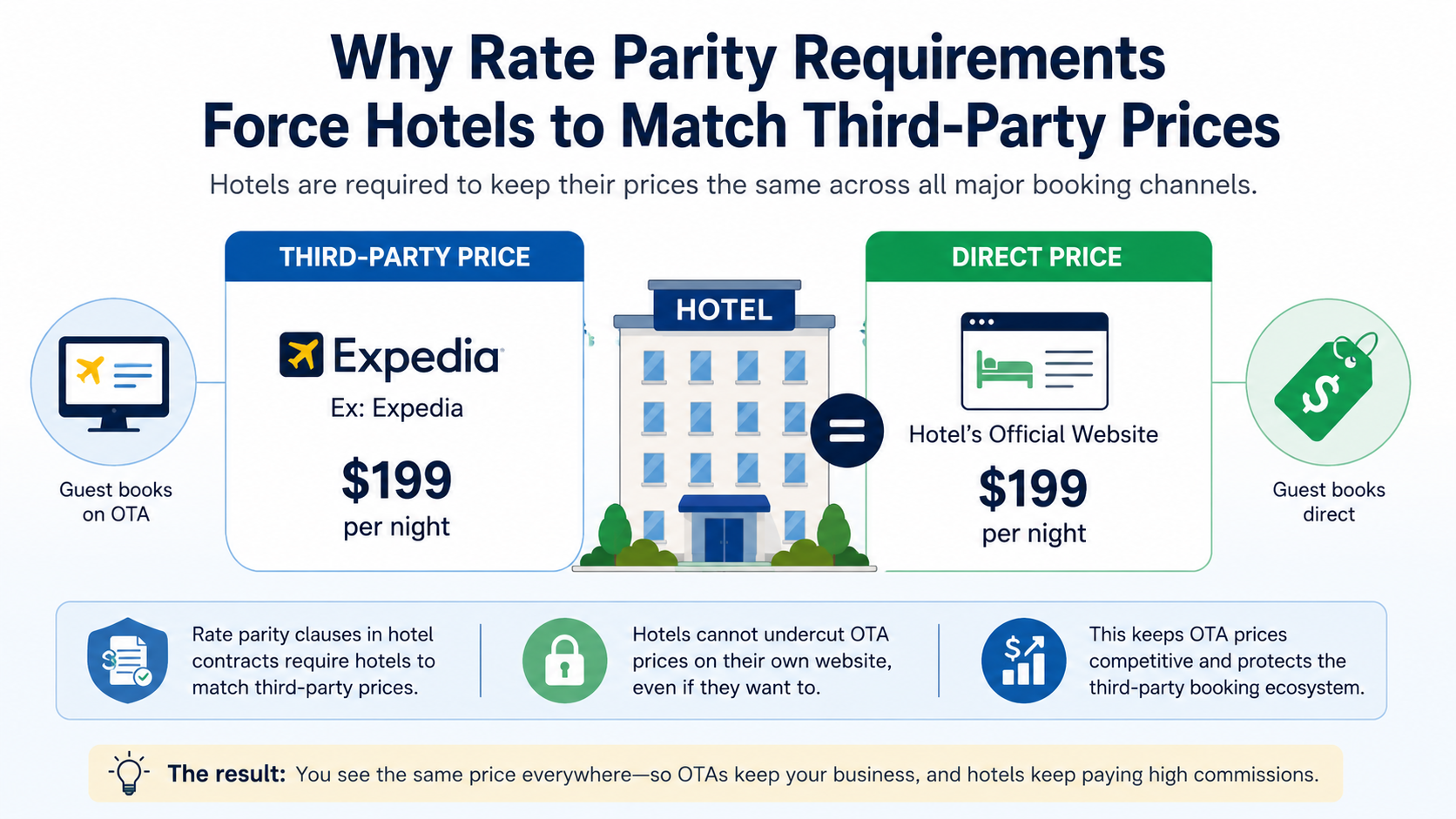
The hotel booking landscape operates under strict regulatory frameworks that benefit OTAs at the expense of both hotels and consumers. Franchisors mandate that rates on the hotel's official website must either match the lowest available online rate or represent the lowest rack rate across all platforms.
These rate parity requirements prevent hotels from offering significantly lower rates on their direct booking channels to avoid commission fees. Even though hotels would save substantial money by bypassing OTA commissions, they cannot legally pass these savings directly to customers through reduced pricing on their own websites.
This regulatory framework maintains the third-party booking ecosystem that generates substantial revenue for travel booking sites, effectively protecting the OTA business model while limiting hotels' ability to compete on price through their own channels. The result is a system where hotel booking direct vs OTA pricing remains artificially constrained, preventing the natural market forces that would otherwise drive prices down for consumers.
How Travel Sites Manipulate Rates While Taking Significant Cuts from Hotels
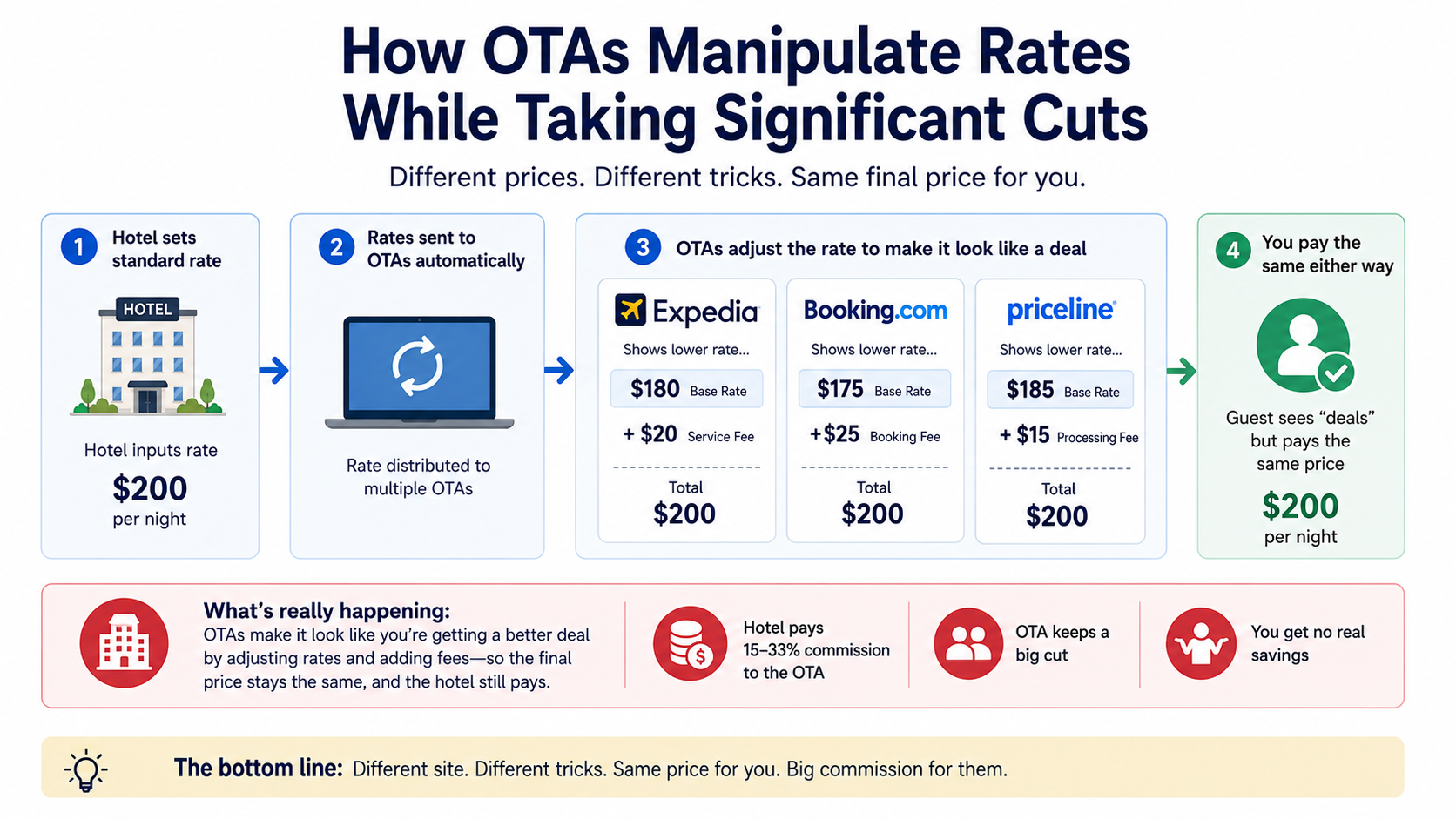
Beyond their substantial commission structures, OTAs employ sophisticated pricing manipulation tactics that create illusions of value while extracting maximum profit. OTAs can adjust hotel rates downward or add fees that result in the same total price for guests, creating an illusion of savings while maintaining their commission percentages.
This manipulation means that the guest experiences no actual savings, yet the OTA secures its substantial commission from the hotel. This demonstrates how travel booking sites extract value without providing corresponding benefits to either hotels or consumers. The apparent Expedia hotel discounts or competitive rates displayed on booking platforms often represent nothing more than creative accounting that maintains OTA profit margins while offering no real value to travelers.
These practices reveal why finding hotel discounts better than Expedia requires understanding the hidden mechanisms that govern online hotel pricing and exploring alternative booking methods that bypass these manipulative structures entirely.
Why All Major Travel Sites Show Nearly Identical Hotel Prices
How Connected Distribution Networks Create the Illusion of Competition
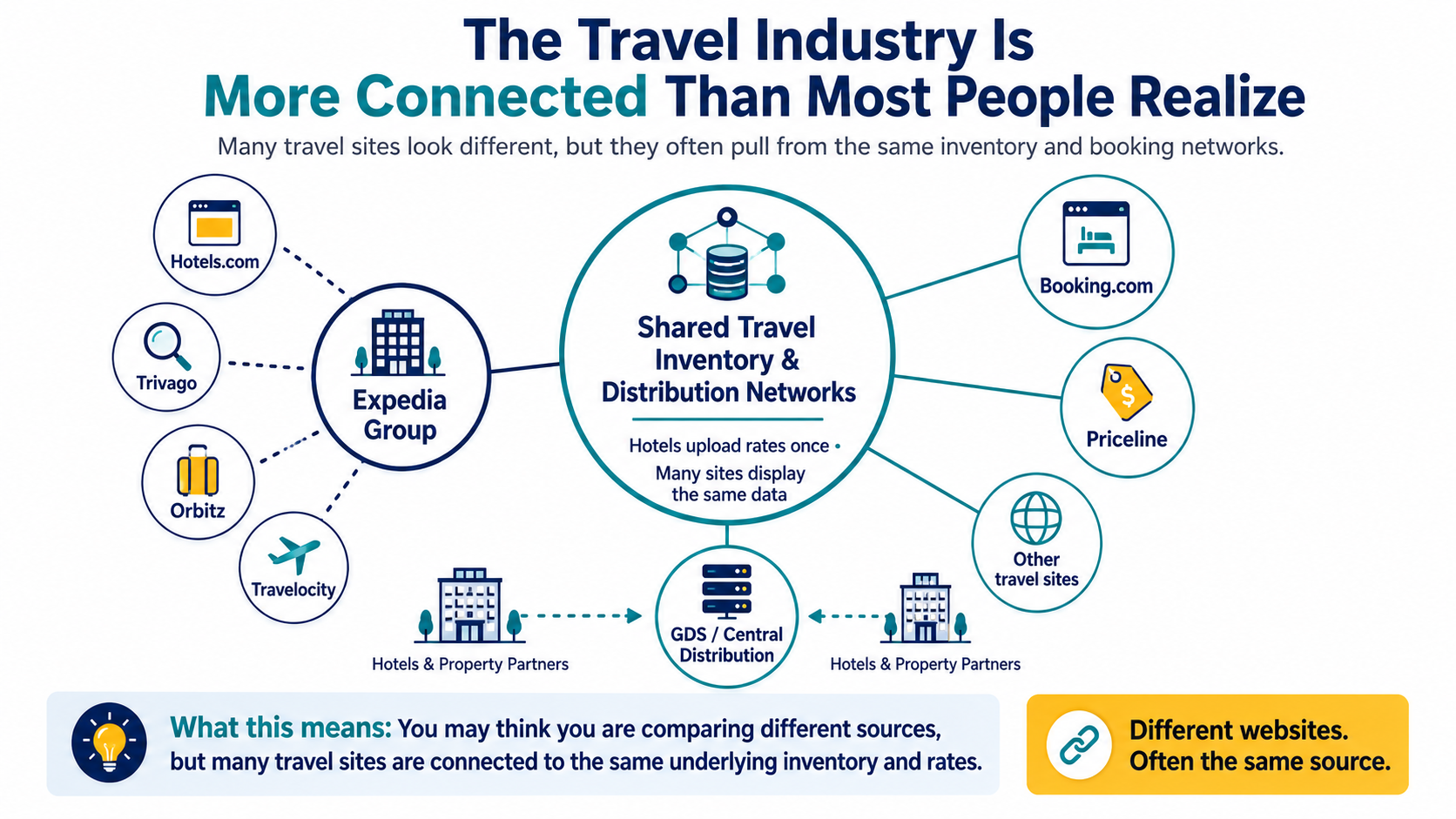
Most major travel booking sites actually tap into the same massive distribution networks, creating an elaborate illusion of choice where none truly exists. Expedia Group exemplifies this consolidation perfectly—they own multiple brands including Hotels.com, Trivago, Orbitz, and Travelocity, all pulling from the identical inventory pool. When you think you're comparison shopping across different platforms, you're often just viewing the same data presented through different interfaces.
The hotel industry operates on a Global Distribution System (GDS) where properties upload their rates and availability to centralized platforms. This system then feeds identical data to hundreds of travel booking sites simultaneously, meaning the "competitive" prices you see across different platforms originate from the same source. This interconnected web makes it nearly impossible to find genuine hotel discounts better than Expedia through traditional comparison shopping methods.
Why Comparison Sites Often Pull from the Same Limited Sources
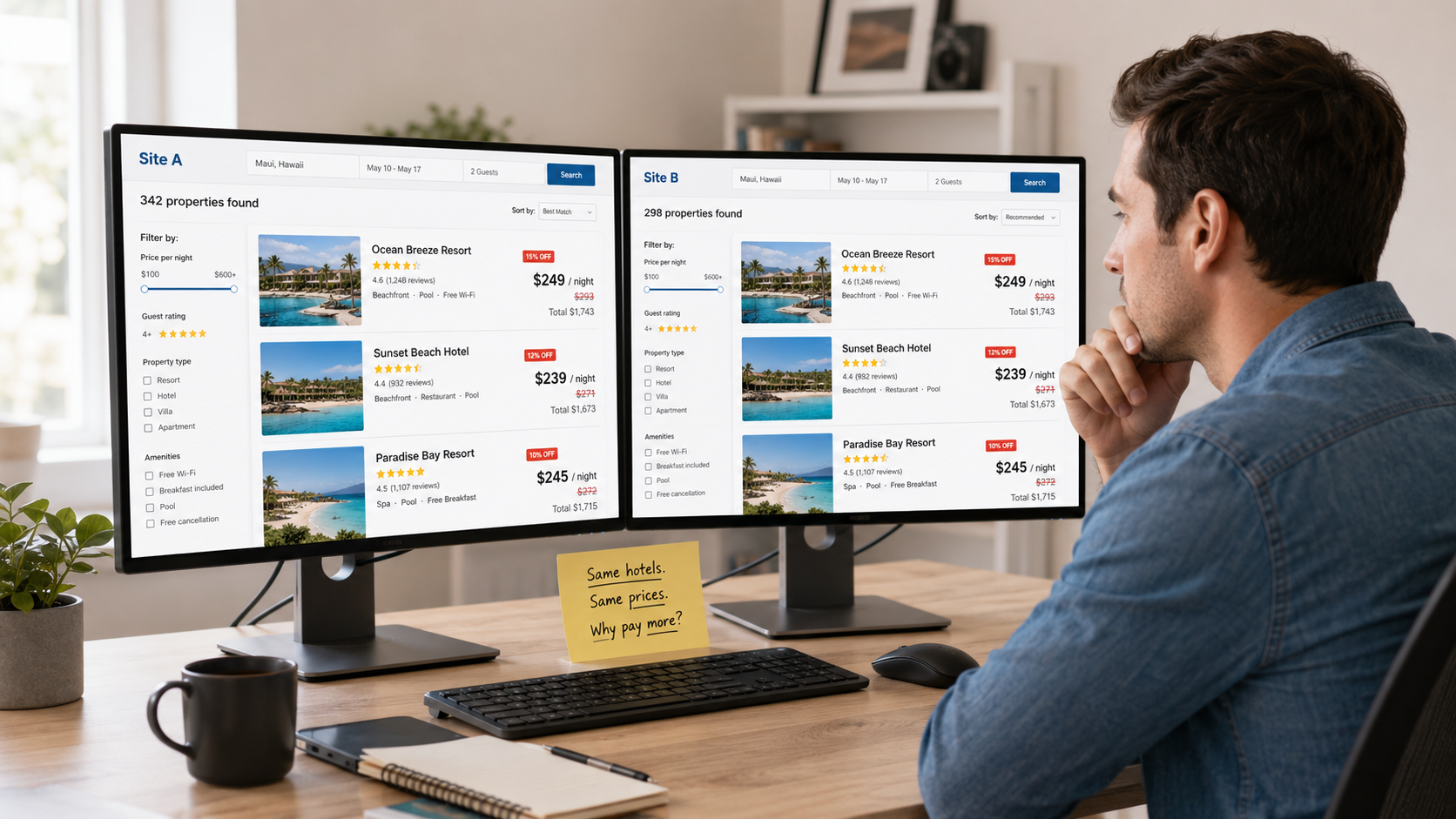
Comparison websites like Kayak, Trivago, or Google Travel perpetuate this problem by pulling data from interconnected sources or parent companies. Rather than accessing truly independent rate sources, these platforms aggregate information that's already been filtered through the same distribution networks. This creates a false sense of comprehensive price shopping when you're actually viewing variations of identical underlying rates.
Hotels typically offer the same commission rates to major distributors, which translates to similar markups across platforms. This standardization makes dramatic price differences rare among mainstream booking sites, explaining why your exhaustive searches rarely yield significantly better hotel deals than what you initially found.
How Price Shopping Feels Futile When Everything Costs the Same

Traditional price shopping often feels futile because interconnected systems and rate parity clauses ensure nearly identical prices across major OTAs like Expedia, Booking.com, and Hotels.com. Hotels implement these rate parity clauses requiring booking platforms to match or stay within a narrow range of their direct booking prices, preventing OTAs from undercutting each other significantly.
The few price variations you do encounter typically come from differences in bundled services, loyalty point values, or temporary promotional credits rather than actual room rate differences. OTAs also use sophisticated algorithms that track user behavior and location data, personalizing prices based on browsing history, device type, or geographic location—but these adjustments happen within the same constrained pricing framework across all major platforms.
Access Private Hotel Rates That Bypass Traditional Booking Site Markups
How Wholesale Platforms Cut Out Middleman Fees and Commissions
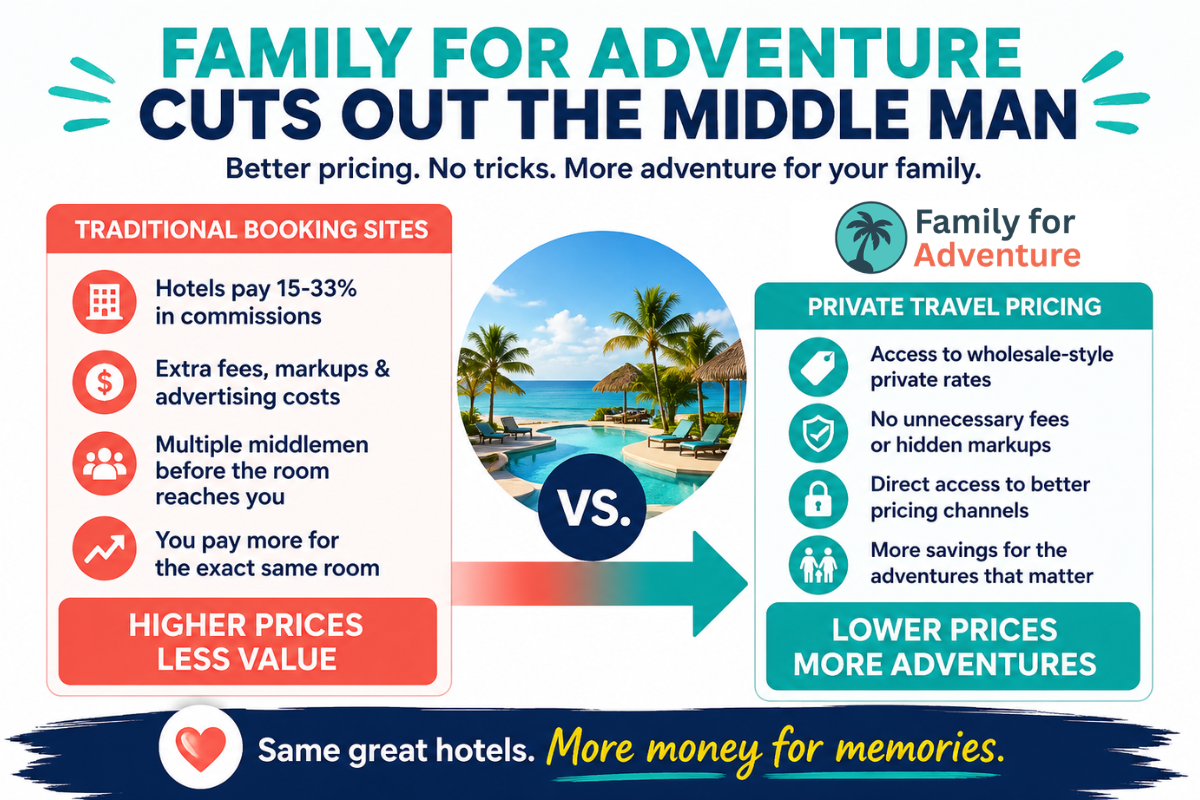
Most public booking sites are built on a commission-based pricing system, where the displayed price includes room for commissions, platform markups, advertising costs, and layers of middlemen. This traditional model means that every time you book through sites offering Expedia hotel discounts, you're actually paying for multiple layers of fees that get added to the base hotel rate.
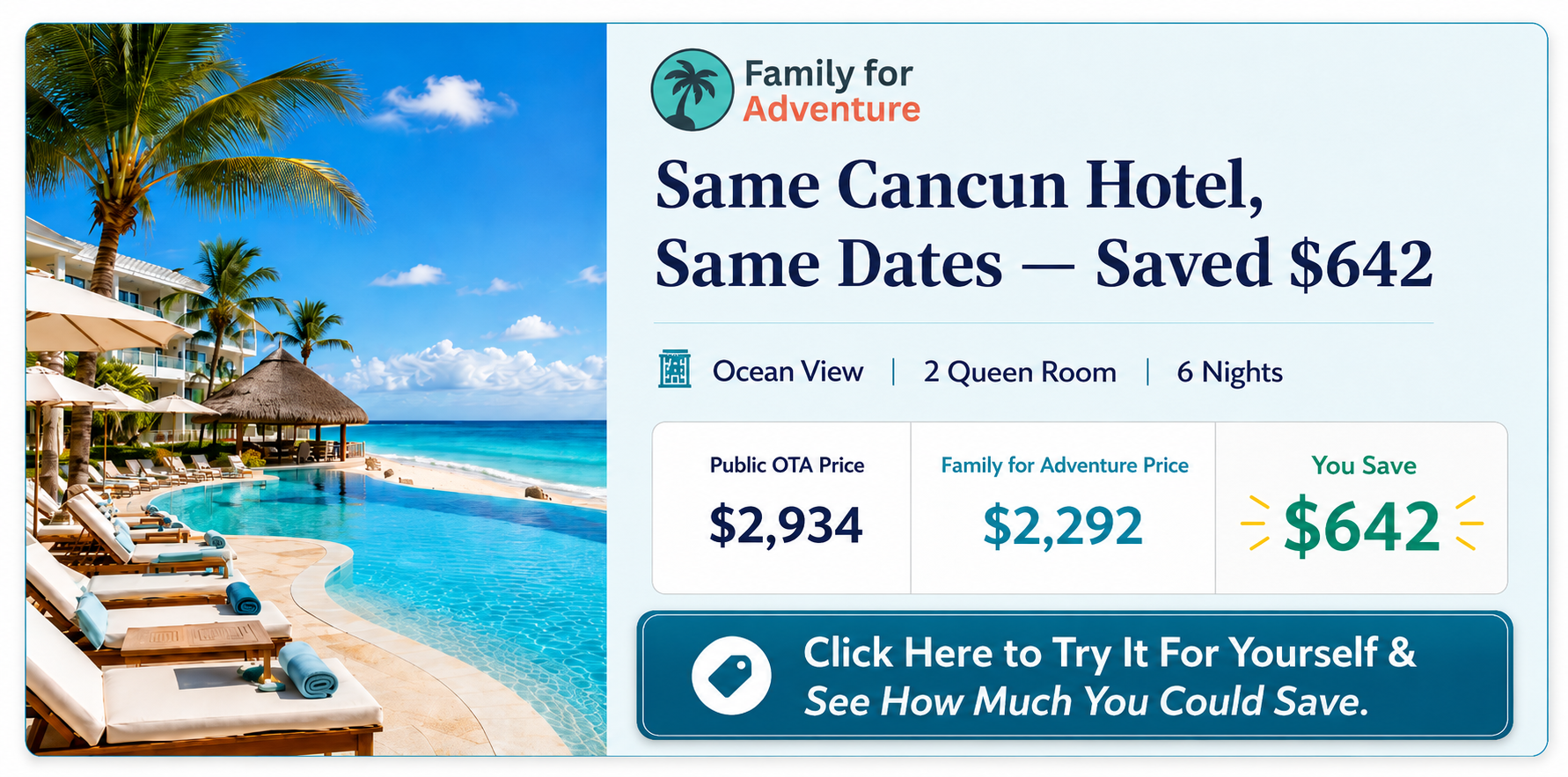
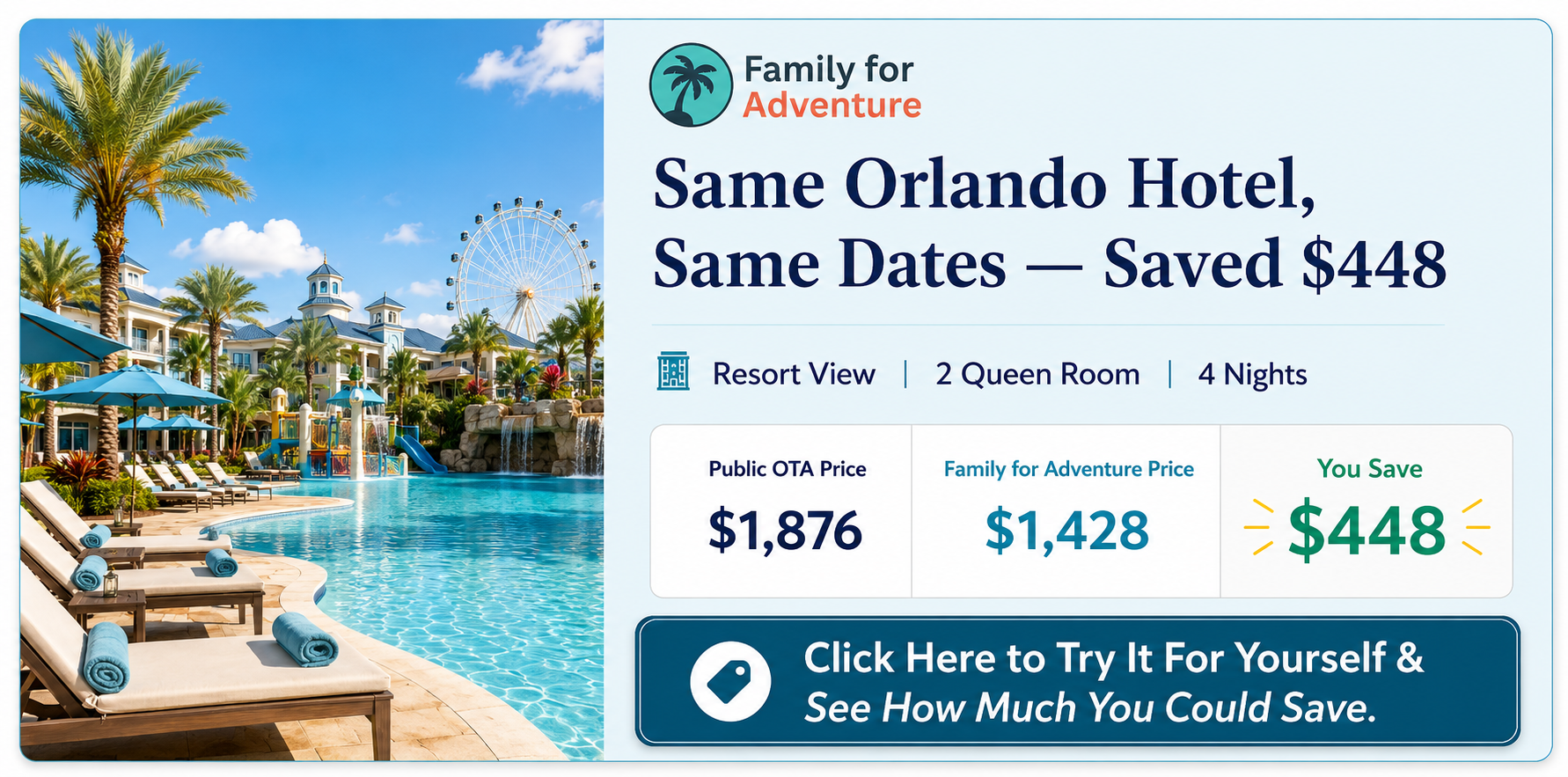
Wholesale platforms operate differently by removing these unnecessary markup layers. That's why we built Family for Adventure. To give members access to private travel pricing through a wholesale-style booking platform, which helps eliminate the commission structure that drives up costs on traditional booking sites. This wholesale approach provides access to rates not built for the public OTA model, offering genuine savings without relying on points, last-minute flash sales, or confusing reward programs that often provide minimal value.
Get Access to Hotel Deals Not Available on Public Travel Sites
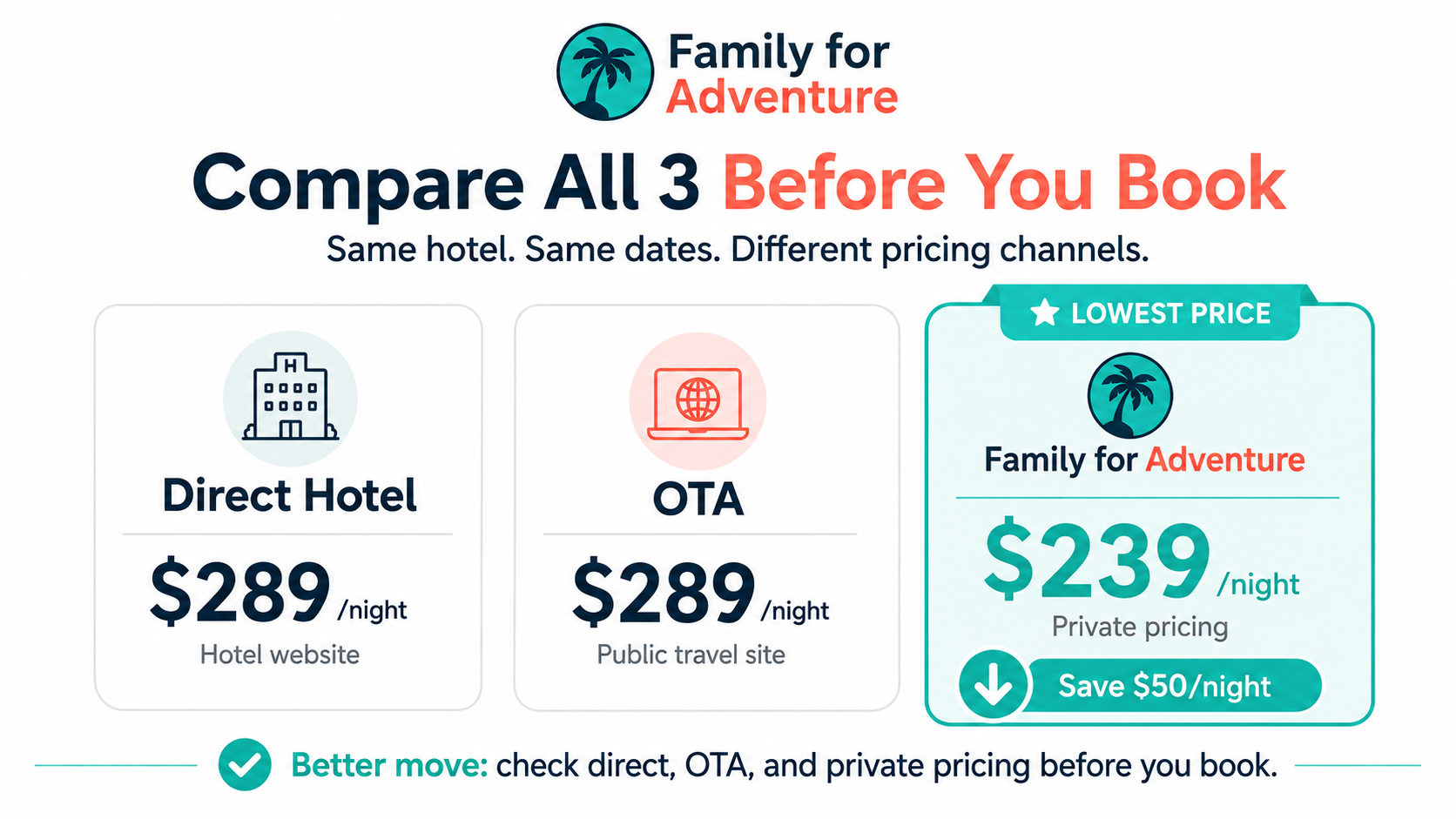
Public OTAs only show public OTA pricing, but this represents just one slice of the hotel pricing ecosystem. Hotels and resorts actually maintain different pricing channels for various types of buyers, including travel agents, wholesale partners, private groups, and member-based platforms. These hidden hotel discounts not on travel sites represent a completely different pricing structure that bypasses the traditional travel site commission markup hotels.
Family for Adventure helps families tap into this private side of travel, allowing them to access pricing not available on public booking sites like Expedia, Orbitz, Priceline, or Travelocity. These private hotel deals hidden rates offer legitimate alternatives to beat Expedia hotel prices by accessing the same inventory through different, more cost-effective channels.
Turn Hotel Savings into More Family Travel Opportunities and Experiences

The reason many families do not travel as often as they would like usually has nothing to do with wanting it less. Most families would love to take more trips, visit more places, and create more memories together. The real obstacle is the price. Once you factor in the hotel, flights, rental car, meals, activities, resort fees, and all the little extras, a vacation that sounded simple at first can suddenly feel too expensive to justify. So instead of booking the trip, many families keep pushing it off.
That is where Family for Adventure comes in. We help families book travel in a smarter way by giving them access to savings on one of the biggest vacation expenses: hotels and resorts. When you spend less on where you stay, you have more room in the budget for the parts of the trip that make it special. That could mean staying an extra night, choosing a better resort, saying yes to more activities, or simply enjoying the trip without worrying as much about the total cost.
The goal is to help your travel budget go further. More affordable hotel pricing can open the door to more trips, better destinations, longer stays, and less stressful vacation planning. Family for Adventure was created to help families stop relying only on public booking sites and start checking a smarter way to book before they pay more than they need to. Because when travel becomes more affordable, it becomes easier to say yes to more memories, more experiences, and more adventures together. 👉 Try it for yourself and see how much you could save.
Why Booking Direct with Hotels Doesn't Guarantee Better Prices
How Price Parity Agreements Limit Hotels' Ability to Offer Lower Rates

Many travelers assume that booking directly with hotels guarantees the lowest rates, but this isn't always the case due to contractual restrictions. Hotels participate in rate parity agreements that prevent them from significantly undercutting their distribution partners like Expedia and other major OTAs. These price parity agreements require hotels to offer the same rates on their direct booking sites as they provide to third-party platforms.
This contractual framework explains why you'll often see identical room rates across multiple travel booking sites. Hotels cannot offer significantly lower prices on their own websites without violating these agreements, which creates a controlled pricing environment that limits competition. The hotel booking direct vs OTA pricing landscape is more restricted than most consumers realize, as these agreements prevent a race to the bottom that could potentially benefit travelers.
When Hotel Perks Don't Translate to Real Money Savings

While some hotels offer perks like free breakfast, room upgrades, or loyalty points for direct bookings, these benefits don't always translate to actual money savings. The perceived value of these amenities may not offset the total cost of your stay, especially when you factor in your personal travel preferences and needs.
It's important to calculate the total cost rather than focusing solely on the room rate. Consider benefits like free parking or breakfast that might be included in a slightly higher direct booking price. However, if you don't typically eat hotel breakfast or need parking, these "perks" add no real value to your booking, making the OTA rate potentially more attractive despite the absence of extras.
Compare Direct, OTA, and Private Pricing to Find the Best Deals
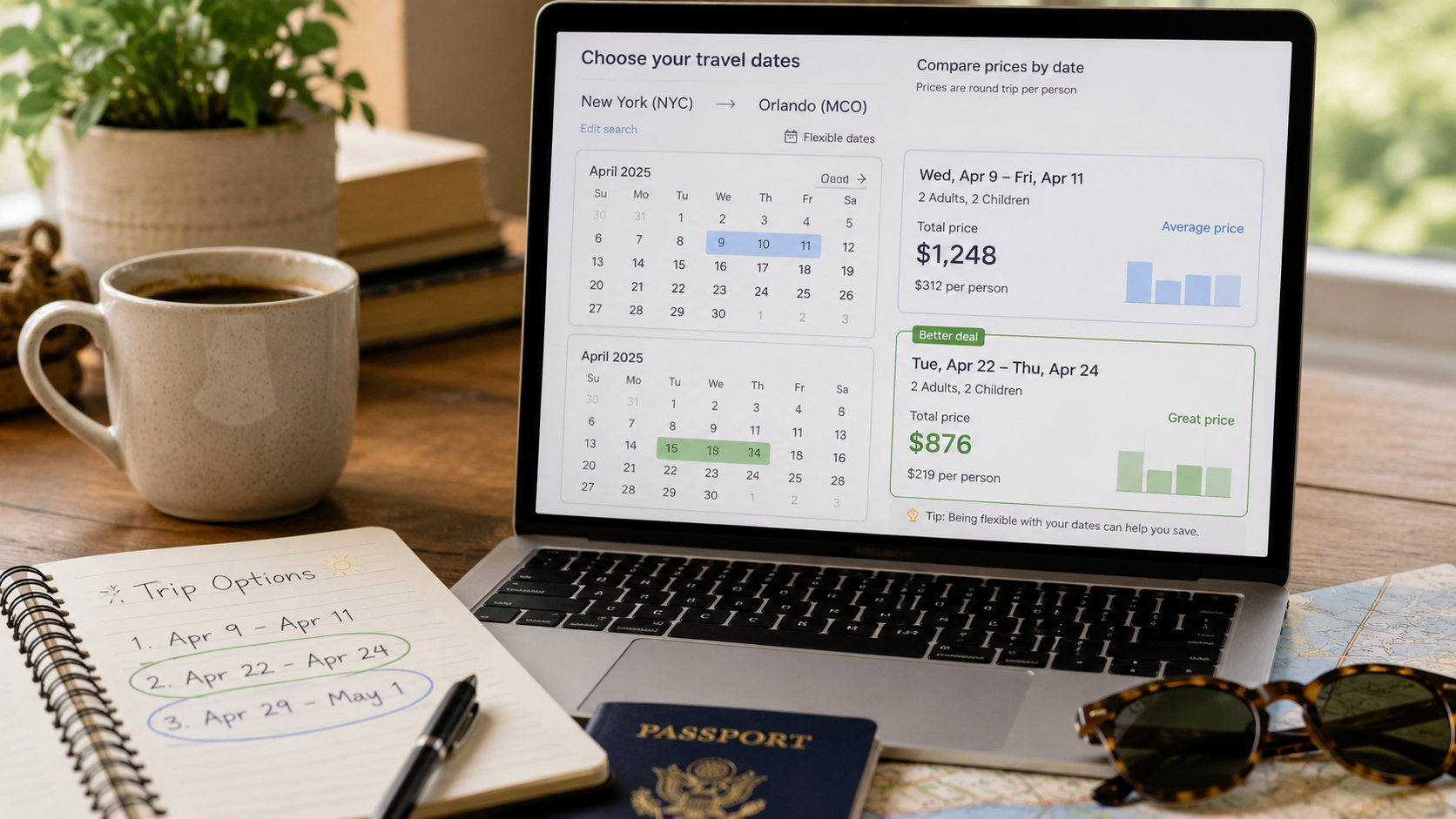
Smart vacation booking requires a comprehensive comparison strategy across multiple channels. Start by checking the hotel's direct website for rates and available perks, then examine major OTAs for package deals or promotional rates. Sometimes OTAs can offer better deals through flash sales or package bundles that hotels cannot match on their own sites due to parity restrictions.
Finally, explore wholesale travel booking platforms that offer contracted rates not available to the general public. These private hotel deals and hidden rates can provide significant savings that bypass traditional booking site markups. This multi-channel approach ensures you're accessing the full spectrum of available pricing options rather than limiting yourself to conventional booking methods that may not offer the most competitive rates.
Credit Card Points May Cost More Than You're Actually Saving
Calculate the Real Cost of Earning "Free" Travel Points Through Spending

Every point earned represents actual spending on a credit card, typically requiring thousands of dollars in spending to accumulate enough points for meaningful travel redemption. To earn enough points for a decent hotel stay or flight (e.g., 50,000-100,000 points), one might need to spend $25,000 to $100,000 on the card, equating to substantial monetary investment that many travelers overlook when calculating their "savings."
When pursuing credit card points hotel savings worth, the mathematics often reveal an uncomfortable truth: the opportunity cost of that spending frequently exceeds the value of the rewards earned. Rather than chasing points through excessive credit card usage, travelers could often achieve better results by finding alternative hotel booking discounts through direct negotiation or specialized platforms that beat Expedia hotel prices without requiring any spending commitments.
How Points Psychology Distracts from Finding Better Cash Prices

The allure of "free" travel creates a psychological barrier that prevents travelers from conducting proper price comparisons. When focused on redeeming points, consumers typically skip the crucial step of researching current cash rates for the same accommodations. This tunnel vision often leads to poor value redemptions where the points could have been more effectively used elsewhere, or where comparable cash rates would have provided superior overall value.
Points psychology particularly impacts decision-making when travelers become emotionally invested in using accumulated rewards, regardless of whether the redemption represents optimal value. This mindset shift away from price comparison shopping means missing opportunities for hidden hotel discounts not on travel sites or private hotel deals that could deliver superior savings without depleting rewards balances.
Avoid Adding to Credit Card Debt While Chasing Travel Rewards
The pursuit of travel points can create a dangerous cycle where spending increases beyond normal budgets to accelerate point accumulation. This behavior pattern often results in carrying credit card balances that incur interest charges, effectively negating any potential savings from future reward redemptions. The interest costs on revolving debt can easily exceed the value of points earned, making the entire strategy counterproductive.
Smart travelers recognize that sustainable reward earning should never involve spending beyond established budgets or carrying balances. Instead of increasing credit card debt while chasing travel rewards, focusing on hotel rate parity bypass methods or accessing private hotel deals through direct relationships often provides immediate savings without the financial risks associated with points-driven spending behaviors.
Ready to Save on Your Next Vacation?
The travel booking world operates on a complex system designed to create an illusion of choice while maintaining consistent pricing across platforms. OTAs like Expedia extract 15-33% commissions from hotels through rate parity agreements that prevent genuine price competition, while credit card points often mask the true cost of travel by encouraging overspending. Understanding these hidden mechanisms reveals why traditional "shopping around" yields nearly identical results across major booking sites.
The smartest approach involves looking beyond public OTA pricing to access wholesale travel booking platforms that operate outside these restrictive agreements. Family for Adventure provides families with private rates not available on public booking sites, allowing vacation budgets to stretch further without the complications of points programs or the false hope of finding dramatically different prices through endless comparison shopping. When you're ready to plan your next trip, try Family for Adventure and discover how much more your travel budget can accomplish with access to true wholesale pricing.